Trump Floats 300 Percent Tariffs for Firms That Skip US Plants
President Trump said on November 5 that foreign companies which refuse to build factories in the United States could face tariffs as high as 300 percent.
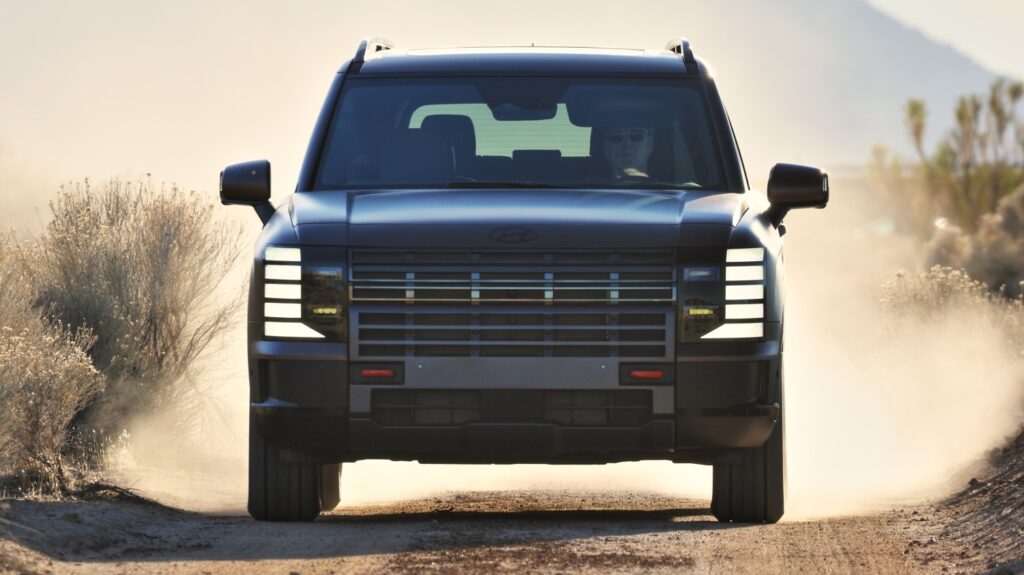
President Trump said on November 5 that foreign companies which refuse to build factories in the United States could face tariffs as high as 300 percent. He was speaking to reporters at the White House two days after his party lost both chambers of Congress, and he cited rates of 50, 100, 150 and 250 percent on the way to that ceiling. For Hyundai Motor Group, which pays a 15 percent duty on every car it ships from Korea, the remarks land squarely on the models it has not yet moved to Georgia and Alabama.
The president claimed that foreign companies are building more than 3,000 factories and production facilities across the country and that 99 percent of those projects were prompted by the fear of tariffs. "If we remove tariffs now, all factory construction will stop," he said, arguing that half-built plants would be left scattered around and that America would once again import from China, Japan, Korea and the Philippines. Companies that build and operate factories here, he added, do not need to pay the tariffs at all, and he promised that "you will see a lot over the next one to two weeks" when asked how he would use executive orders over the next two years.
The remarks were reported by Chosunbiz and Aju Press in Seoul, where the question of what a Democratic Congress means for Korean exporters has dominated the week. Aju Press noted that the 300 percent figure "appeared to be more a reflection of his aggressive rhetoric than a specific new tariff measure," and BusinessKorea pointed out that the president named no products, companies or timing. Earlier in the week the White House had said that "American manufacturing is surging" and cited a report showing ten consecutive months of expansion in the sector.
What the threat means for Hyundai depends on which model is in the showroom. Korean-built cars have paid a 15 percent US tariff and steel a 50 percent duty since April 2025, The Korea Times reported this week, and the group has pledged $26 billion, or 35 trillion won, for US investment from 2025 through 2028, aimed mainly at building more cars locally. The Hyundai Motor Group Metaplant America in Georgia is already running, a $5.8 billion electric arc furnace steel mill in Louisiana is due to start operating in 2029, and in October Hyundai committed about $450 million to its Montgomery, Alabama plant to build the all-new Tucson, a refreshed Santa Fe and new hybrid and range-extender engines, with Tucson production in Alabama due to start before the end of this year. Those are exactly the plants a build-here-or-pay policy rewards. The models still shipped from Korea, including the Palisade, the Kona, the Elantra and the Ioniq 6, are the ones exposed if the rhetoric ever becomes a proclamation.
The timing is the part that cuts against the president’s leverage. Shin Won-kyu, who heads the global economic research team at the Federation of Korean Industries, told The Korea Times that the biggest risk for Korean companies is "weakened bargaining power after the investment is made," because plants cannot be moved once built while tariff rates can change with a single proclamation. He expects a Democratic Congress to change how tariffs are applied more than how high they are, and advised exporters to prepare for a world in which tariffs swing less but the rules get more demanding.
The HyundaiHQ Take
Hyundai does not need to be told to build in America, because it has already written the checks, and a 300 percent number is the kind of figure that makes headlines rather than customs schedules. The real exposure for US shoppers is narrower and more specific: the Korean-built models that cannot be moved quickly, which is why the Palisade and the Ioniq 6 carry the prices they do and why the Tucson Hybrid is about to roll out of Montgomery. If the next two weeks bring the executive orders the president promised, the question for Hyundai is not whether it is building here but whether the models it still imports can absorb another round. Our guess is that the brand would rather raise prices on a Palisade than cut its margins, and buyers should plan accordingly.
More on the Tucson
Related
Hyundai Palisade Deals for November 2026: Leases From $389 a Month
Hyundai is offering the 2026 Hyundai Palisade SE on a lease from $389 a month and financing from 3.9% for 60 months on the 2027 Hyundai Palisade Hybrid…
Hyundai Jumps Two Places Among the World’s Most Valuable Car Brands
Hyundai ranked 29th in Interbrand's Best Global Brands 2026 report, released on October 28, with a brand value of $25 billion, and it climbed from sixth to fourth…
2026 Hyundai Palisade Recalled Over Instrument Panel Issue
In March 2026, Hyundai Motor America began recalling select 2026 Hyundai Palisade Hybrid and 2026 Hyundai Palisade models over a gauge cluster that may fail.
Comments (0)
Join the discussion