Tucson or RAV4: The Toyota Sips Less, the Hyundai Costs Less
The Hyundai Tucson undercuts the Toyota RAV4 at every matched trim, by $1,000 between the cheapest hybrids.
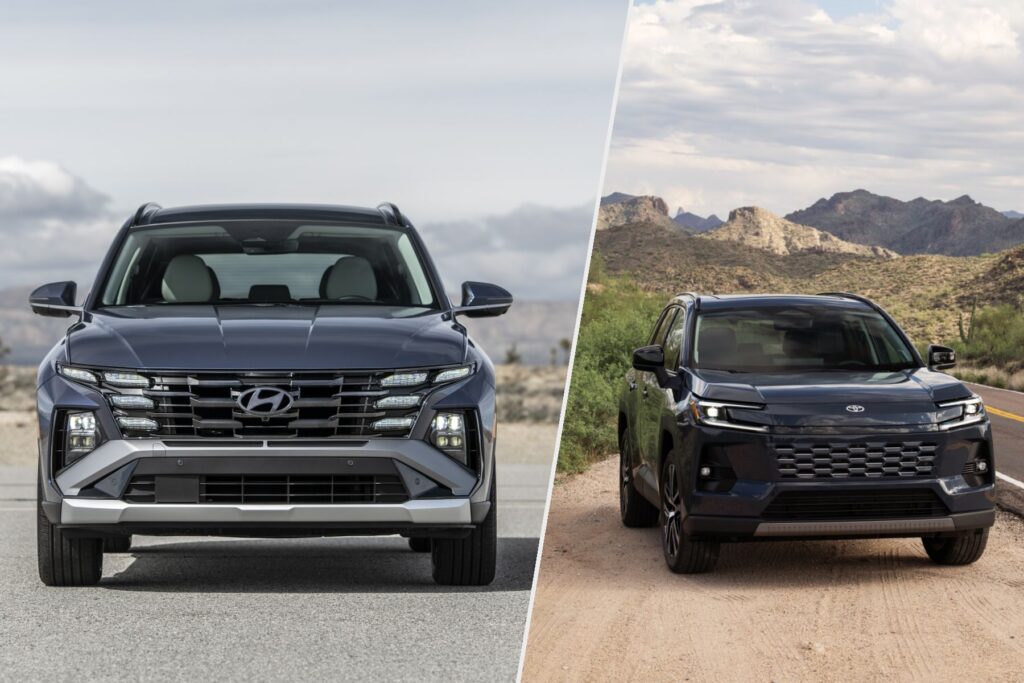
The Hyundai Tucson undercuts the Toyota RAV4 at every matched trim, by $1,000 between the cheapest hybrids. At the very bottom the gap grows to $2,600, because the Tucson still sells a gasoline model and the RAV4 no longer does. The RAV4 earns its premium at the pump instead, with a front-drive hybrid that Toyota rates 5 mpg better than the Tucson Hybrid and a plug-in that goes 20 miles farther on electricity.
That leaves a clear split for shoppers. Families who want the most rear legroom, the longest warranty and a crash-test record that is already complete will find the Tucson the easier choice, while drivers who cover long distances, tow up to 3,500 pounds or want to commute on electric power have real reasons to spend more on the Toyota.
| 2026 Hyundai Tucson | 2027 Toyota RAV4 | |
|---|---|---|
| Price range (MSRP, excluding destination) | $29,700 to $48,900 | $32,300 to $49,100 |
| Gasoline | 2.5-liter four, 187 hp, $29,700 to $41,175 | Not offered |
| Hybrid | 1.6-liter turbo hybrid, 231 hp, $31,300 to $42,925 | 2.5-liter hybrid, 222 hp (FWD) or 229 hp (AWD), $32,300 to $43,900 |
| Plug-in hybrid | 268 hp, AWD, $40,675 to $48,900 | 321 hp, AWD, $42,100 to $49,100 |
| Combined mpg | Gas 28 (FWD), 26 (AWD); Hybrid 38 (FWD and Blue AWD), 36 (AWD); EPA | Hybrid 43 (FWD), 40 to 42 (most AWD), 38 (Woodland); Toyota estimates |
| Plug-in electric range | 32 miles, 77 MPGe (EPA) | 45 to 52 miles, 105 MPGe (Toyota estimates) |
| Seats | 5 | 5 |
| Cargo, behind rear seat / folded | 38.7 / 74.8 cu ft (gas); 31.9 / 66.3 (plug-in) | 36.6 to 37.8 cu ft / not published |
| Rear legroom | 41.3 in (39.5 plug-in) | 37.8 in |
| Towing | 2,750 lb (gas); 2,000 lb (hybrid, plug-in) | 1,750 or 3,500 lb by grade (hybrid) |
| Length / wheelbase | 182.7 / 108.5 in | 181.0 / 105.9 in |
| IIHS | TOP SAFETY PICK+ | No award listed |
| NHTSA overall | 5 stars (gas and hybrid) | Not rated |
| Warranty, basic / powertrain | 5 yr/60,000 mi / 10 yr/100,000 mi | 3 yr/36,000 mi / 5 yr/60,000 mi |
Both price columns exclude destination, which is $1,650 on the Tucson and $1,595 on the RAV4, so the cheapest of each comes to $31,350 and $33,895 delivered.
Price and Trims
Hyundai’s Tucson page and its pricing sheet start the 2026 Tucson at $29,700 for the front-drive SE and run to $41,175 for the gasoline Limited with all-wheel drive. The hybrid spans $31,300 for the front-drive SE to $42,925 for the Night, and the plug-in hybrid comes as the SEL at $40,675 or the Limited at $48,900. Our Tucson deals page for November 2026 collects the incentives Hyundai was offering that month.
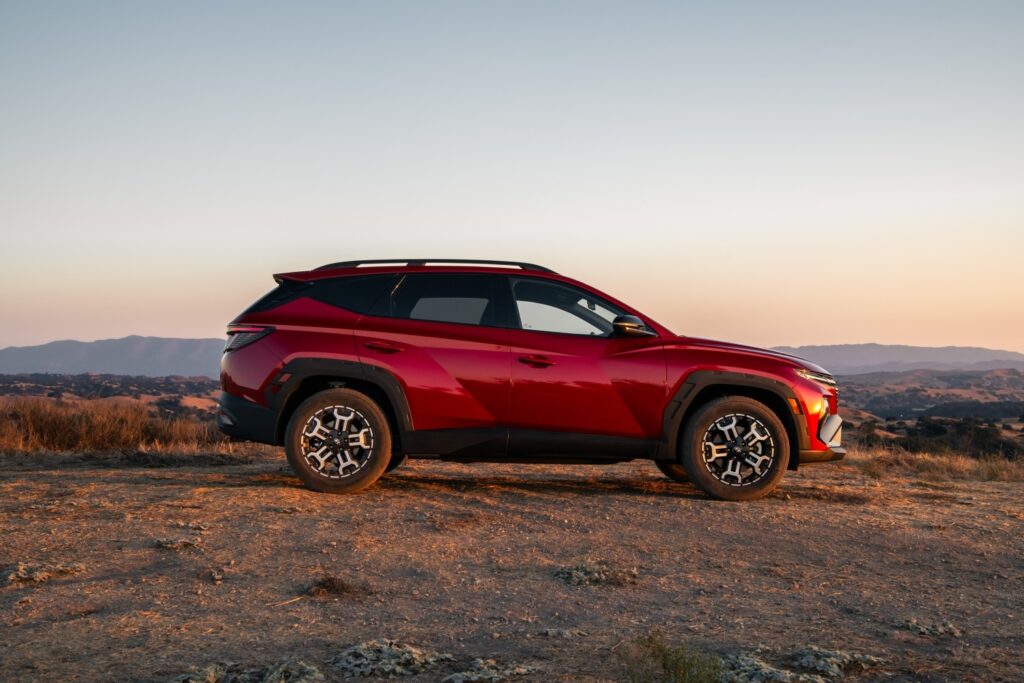
Toyota’s full-line price list opens the 2027 RAV4 Hybrid at $32,300 for the front-drive LE and tops it out with the Limited at $43,900, while the plug-in runs from the SE at $42,100 to the GR SPORT at $49,100. Matched as closely as the lineups allow, the Tucson Hybrid SE saves $1,000 on the RAV4 LE, the all-wheel-drive Tucson Hybrid Blue SE at $32,800 saves $1,100 on the LE AWD, and the Tucson Hybrid Limited costs $1,475 less than its Toyota namesake. The plug-ins are closer, $1,425 apart at the entry point and $200 apart at the top. The trail-themed trims differ more, because the gasoline Tucson XRT at $35,225 costs $5,430 less than the RAV4 Hybrid Woodland at $40,655.
Powertrains and Fuel Cost
The Tucson’s base engine is a 187-horsepower 2.5-liter four with an eight-speed automatic, rated 28 mpg combined with front-wheel drive. The hybrid pairs a 1.6-liter turbo four with an electric motor for 231 horsepower, and fueleconomy.gov rates the front-drive version at 38 mpg combined and $1,600 a year in fuel. The Hybrid Blue matches that 38 mpg with all-wheel drive, and the other all-wheel-drive hybrids are rated 36.
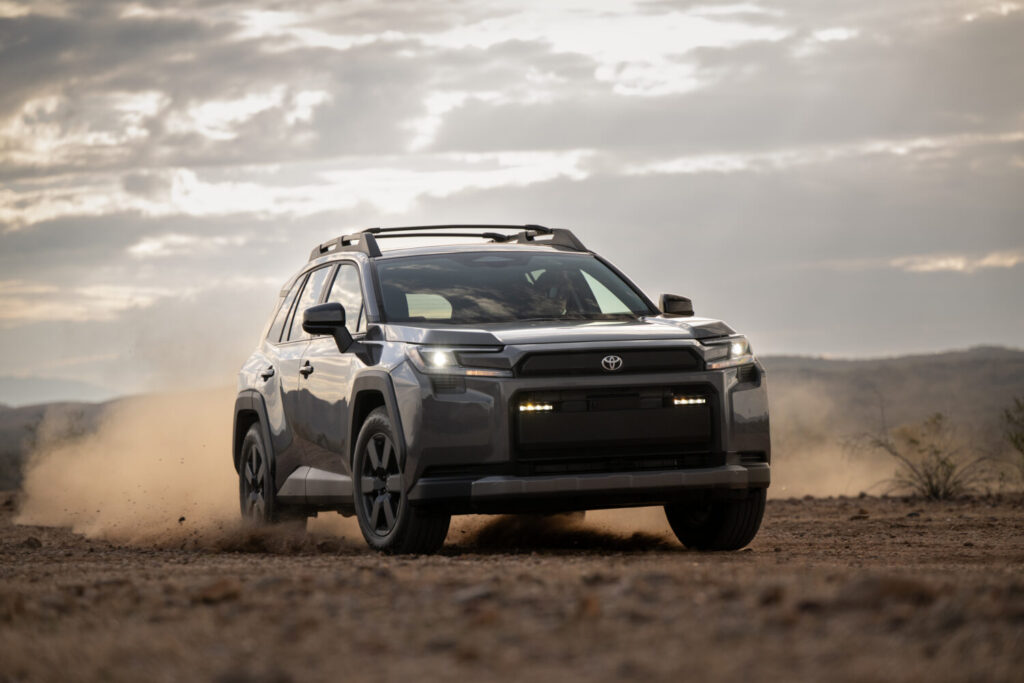
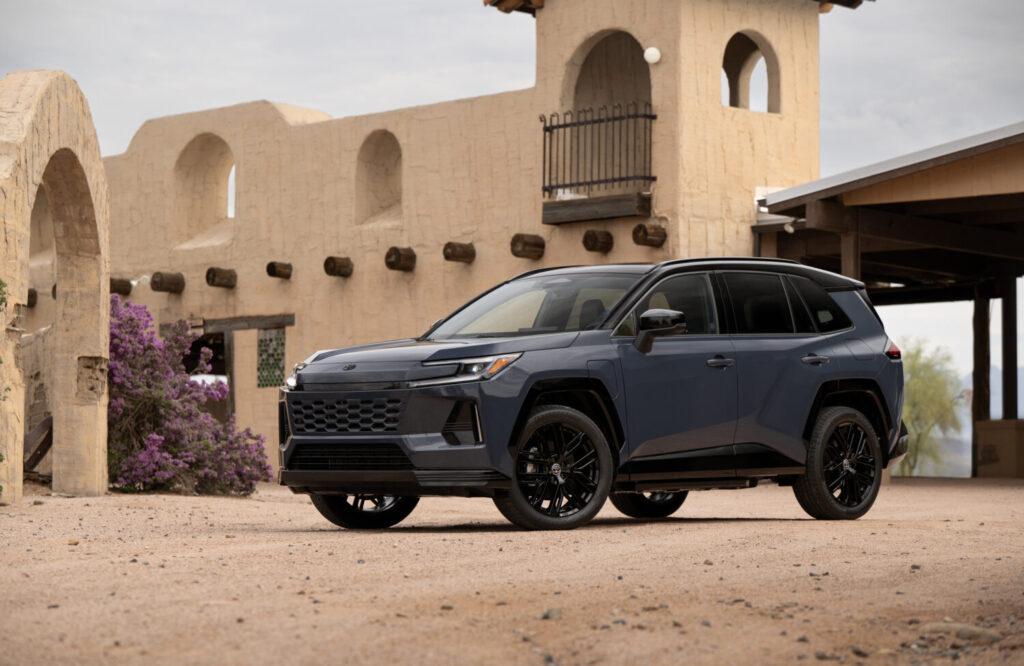
The RAV4 comes only as a hybrid or plug-in hybrid, and Toyota’s November 5 release gives its 2.5-liter system 222 horsepower with front-wheel drive and 229 with all-wheel drive. Toyota estimates 43 mpg combined for the front-drive models and 42 for the LE and SE with all-wheel drive, 4 mpg better than the Tucson Hybrid Blue, though the Limited’s 40 mpg narrows the lead and the Woodland’s 38 erases it. The EPA has not yet posted ratings for the 2027 RAV4.
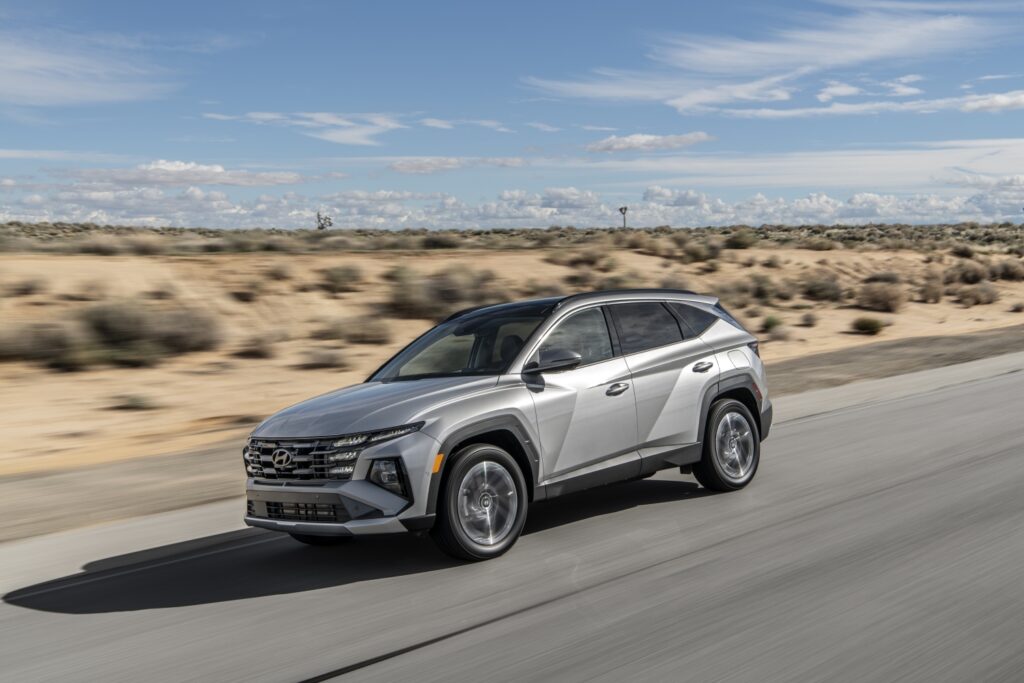
The plug-in gap is wider. The Tucson Plug-in Hybrid makes 268 horsepower and carries an EPA rating of 32 electric miles, 77 MPGe and 35 mpg on gasoline. Toyota estimates 52 electric miles for the RAV4 SE plug-in, along with 321 horsepower, a NACS port with DC fast charging and an 11-kW onboard charger, and it says the plug-in reaches dealers in early 2027.
Space, Safety and Ownership
The Tucson is 1.7 inches longer at 182.7 inches and rides on a wheelbase 2.6 inches longer, and most of that goes to the back seat, where it gives 41.3 inches of legroom to the RAV4’s 37.8. Hyundai quotes 38.7 cubic feet behind the gasoline Tucson’s rear seat and 74.8 with it folded, against 37.8 cubic feet behind the seat on most RAV4 grades, according to Toyota’s specifications. The Tucson Plug-in Hybrid gives up some of that space, at 31.9 and 66.3 cubic feet.
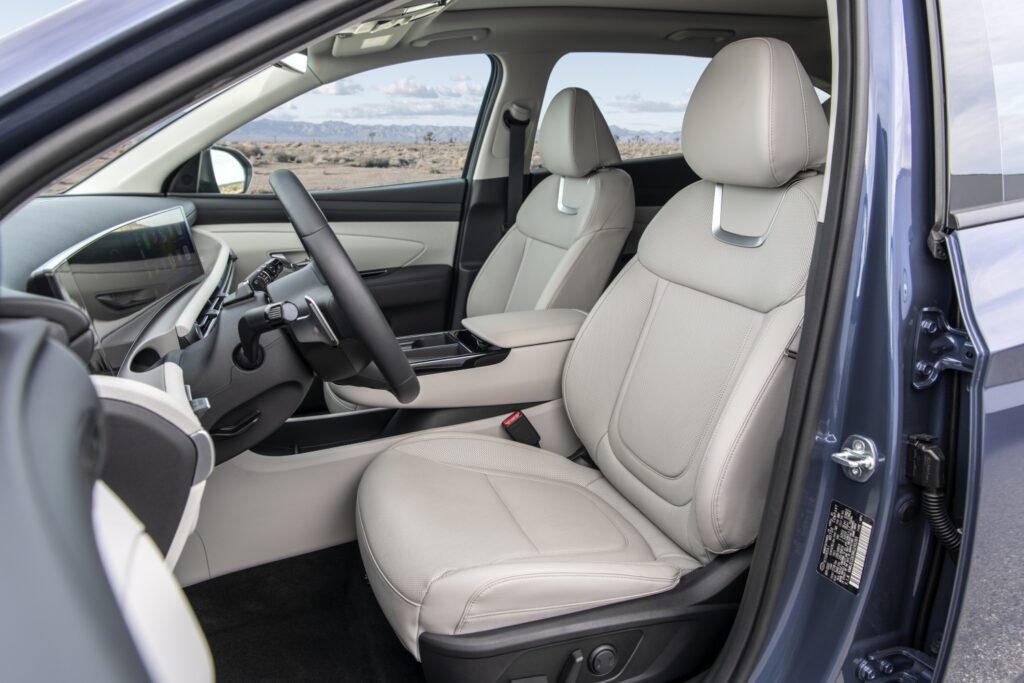
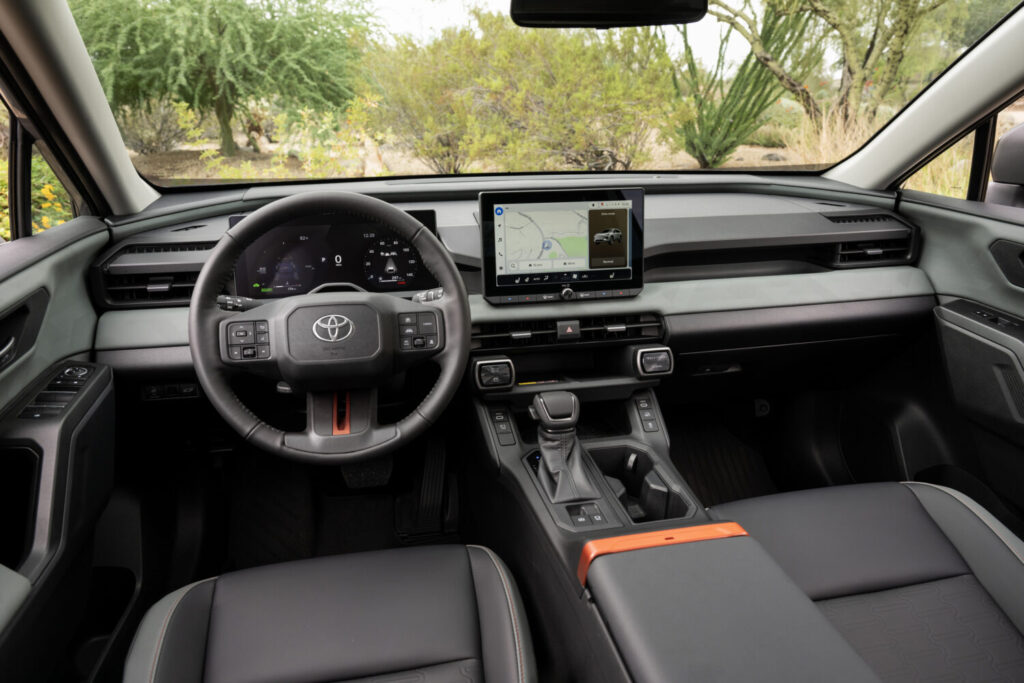
Both cabins put a large screen on the dash, a 12.3-inch touchscreen in every Tucson and a 10.5-inch or 12.9-inch unit in the RAV4. Towing favors the Toyota, which is rated for 3,500 pounds in most all-wheel-drive grades and 1,750 in the others, while the Tucson tows 2,750 pounds as a gasoline model and 2,000 as a hybrid or plug-in.
The IIHS names the 2026 Tucson a TOP SAFETY PICK+, and NHTSA gives the gasoline and hybrid models its top five-star rating, while the 2027 RAV4 carries no IIHS award and has not yet been rated by NHTSA. Hyundai’s warranty runs five years or 60,000 miles, with ten years or 100,000 miles on the powertrain. Toyota covers three years or 36,000 miles and five years or 60,000 miles on the powertrain, with ten years or 150,000 miles on the hybrid battery and a year of scheduled maintenance. Hyundai has already revealed a new-generation Tucson that it says reaches North America in 2027, without US prices so far.
The HyundaiHQ Take
Buy the Tucson if price, back-seat room and peace of mind matter most. It is the cheaper car at every matched trim, its rear seat is genuinely roomier, its warranty is twice as long on the powertrain, and its crash-test record is already finished. The front-drive hybrid gives up 5 mpg to the Toyota, but it starts $1,000 lower, and the gasoline SE opens the lineup at a price the RAV4 does not reach.
Buy the RAV4 if you drive a lot of miles with all-wheel drive, tow up to 3,500 pounds or want a plug-in that can cover a longer commute on electricity alone, as long as you can wait for the plug-in to arrive. Anyone weighing the Tucson’s Kia cousin against the same Toyota will find the numbers in our Sportage and RAV4 comparison, and anyone wondering whether to step up a size can read our Tucson and Santa Fe comparison.
Related

Half the Year’s Best-Brand Trophies Just Went to Hyundai and Genesis
Hyundai Motor Group came away with three of the six brand awards handed out for 2027.
Tucson or Santa Fe: Top-Trim Tucson Money Buys a Third Row
An all-wheel-drive Hyundai Tucson Limited costs $4,075 more than an all-wheel-drive Hyundai Santa Fe SE, which adds a third row and 90 more horsepower.

The New Elantra Gets Its American Debut This Thursday
Hyundai will unveil the all-new 2027 Elantra and the 2028 Elantra Hybrid at the Los Angeles Auto Show on Thursday, November 19, in a global reveal that starts…
Comments (0)
Join the discussion