Tucson or Santa Fe: Top-Trim Tucson Money Buys a Third Row
An all-wheel-drive Hyundai Tucson Limited costs $4,075 more than an all-wheel-drive Hyundai Santa Fe SE, which adds a third row and 90 more horsepower.
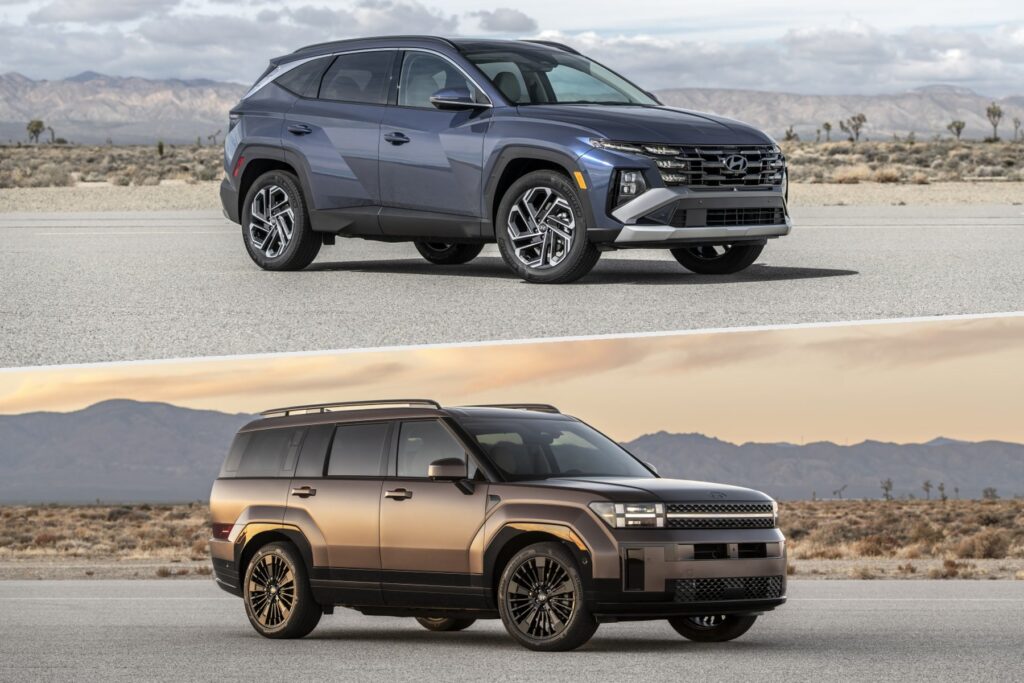
An all-wheel-drive Hyundai Tucson Limited costs $4,075 more than an all-wheel-drive Hyundai Santa Fe SE, which adds a third row and 90 more horsepower. The Santa Fe can also tow 750 pounds more, and while the Tucson is still the cheaper SUV by $5,600 at the bottom of each range, the two lineups overlap across a wide band of prices, and that band is where most of the real decisions get made.
The Tucson suits a household that never carries more than five people and wants the better fuel economy of the two, including a plug-in hybrid the Santa Fe does not offer. The Santa Fe suits buyers who need six or seven seats now or expect to soon, who tow a small camper or boat, or who simply want more power for the money and will accept a few miles per gallon less on gas.
This comparison covers the 2026 Tucson and the 2027 Santa Fe, the model years Hyundai was selling and pricing in November 2026. An all-new Tucson was unveiled in New York in October 2026 and reaches North America in 2027, and we will update this comparison once it has US prices. Hyundai has also said a range-extender Santa Fe goes on sale in the first half of 2027, and spy shots point to a refreshed body around the same time.
Price and Trims
Prices below are starting MSRPs before freight, which is $1,650 on both models according to the 2026 Tucson pricing sheet and the 2027 Santa Fe pricing sheet, so a base Tucson SE comes to $31,350 delivered and a base Santa Fe SE to $36,950. Specifications come from Hyundai’s Tucson and Santa Fe pages and the pressroom spec sheets.
| 2026 Hyundai Tucson | 2027 Hyundai Santa Fe | |
|---|---|---|
| Price range (before $1,650 freight) | $29,700 to $48,900 | $35,300 to $50,750 |
| Gas engine | 2.5L four, 187 hp, 178 lb-ft | 2.5L turbo four, 277 hp, 311 lb-ft |
| Hybrid | 1.6L turbo hybrid, 231 hp, 271 lb-ft | 1.6L turbo hybrid, 231 hp, 271 lb-ft |
| Plug-in hybrid | 268 hp, 32 miles electric range | Not offered |
| EPA combined, gas FWD / AWD | 28 / 26 mpg | 24 / 23 mpg |
| EPA combined, hybrid FWD / AWD | 38 / 36 mpg (38 Hybrid Blue SE AWD) | 36 / 35 mpg |
| Seats | 5 | 6 or 7 |
| Cargo behind second row / maximum (SAE) | 38.7 / 74.8 cu ft | 40.5 / 79.6 cu ft (14.6 behind third row) |
| Towing, gas / hybrid | 2,750 / 2,000 lb | 3,500 (4,500 XRT) / 2,000 lb |
| Length / wheelbase | 182.7 / 108.5 in | 190.2 / 110.8 in |
| IIHS | 2026 Top Safety Pick+ | 2026 Top Safety Pick+ |
| NHTSA overall | 5 stars | 5 stars |
| Warranty, basic / powertrain | 5 yr/60,000 mi / 10 yr/100,000 mi | 5 yr/60,000 mi / 10 yr/100,000 mi |
Lining the trims up by price shows how far the Tucson reaches into Santa Fe territory. Each price carries the drive shown.
| Where the money falls | Tucson | Santa Fe |
|---|---|---|
| Where the Santa Fe starts | XRT AWD, $35,225; Hybrid SEL Convenience AWD, $35,250; SEL Premium AWD, $35,550 | SE FWD, $35,300; Hybrid SE FWD, $36,650 |
| Santa Fe SE and SEL money | Limited FWD, $39,675 | SE AWD, $37,100; SEL FWD, $37,840; Hybrid SE AWD, $38,450; Hybrid SEL FWD, $38,940; SEL AWD, $39,640 |
| Top Tucson money | Plug-in Hybrid SEL AWD, $40,675; Limited AWD, $41,175; Hybrid Limited AWD, $42,425; Hybrid Night AWD, $42,925 | Hybrid SEL AWD, $40,740; XRT AWD, $42,290 |
| Flagship money | Plug-in Hybrid Limited AWD, $48,900 | Calligraphy FWD, $47,850; Hybrid Calligraphy FWD, $48,950 |
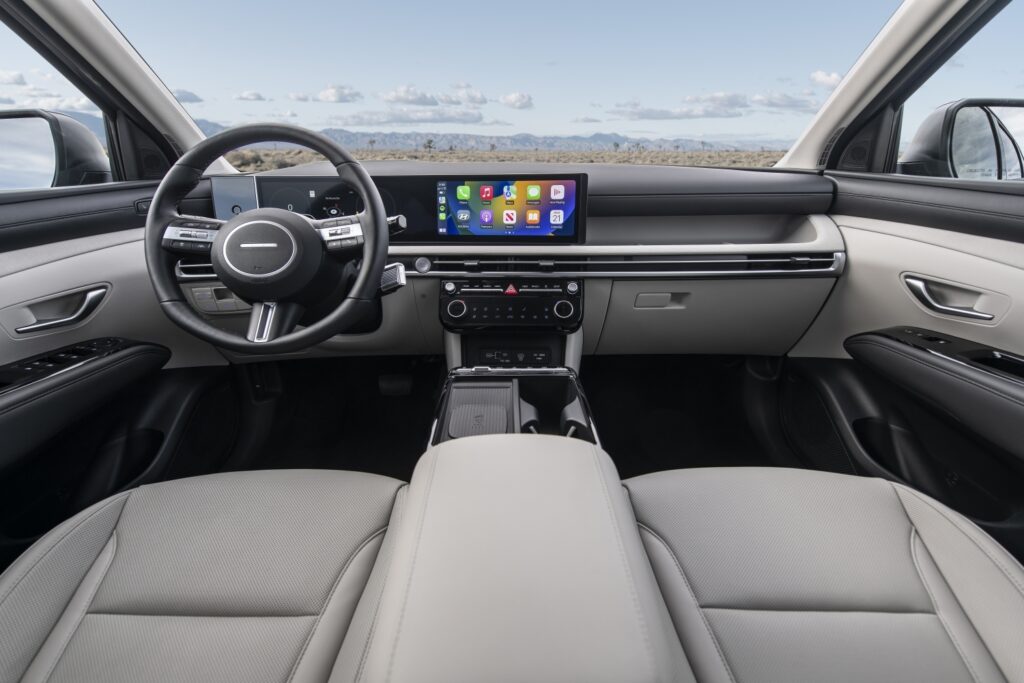
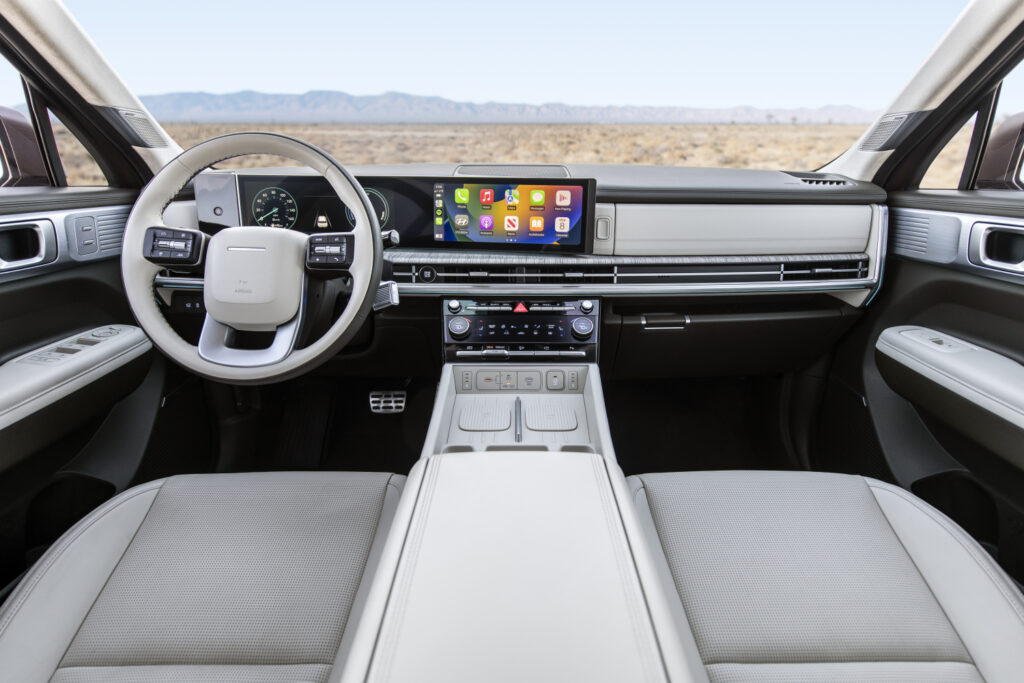
A front-drive Tucson Limited costs $1,835 more than a front-drive Santa Fe SEL and $35 more than an SEL with all-wheel drive. Among hybrids, the Tucson Hybrid Limited costs $1,685 more than a Santa Fe Hybrid SEL, both with all-wheel drive, and the Tucson Plug-in Hybrid Limited sits just $50 below a front-drive Santa Fe Hybrid Calligraphy. What the Tucson buyer gets for that money is equipment on a smaller body; the Santa Fe SE has stain-resistant cloth seats, and the SEL adds leatherette, heated front seats and a power driver’s seat. At like-for-like trims the full step up runs from $5,175 for a front-drive Limited to $7,065 for an XRT with all-wheel drive, and it is $5,350 at the Hybrid SE and $5,325 at the Hybrid Limited.
Powertrains and Fuel Cost
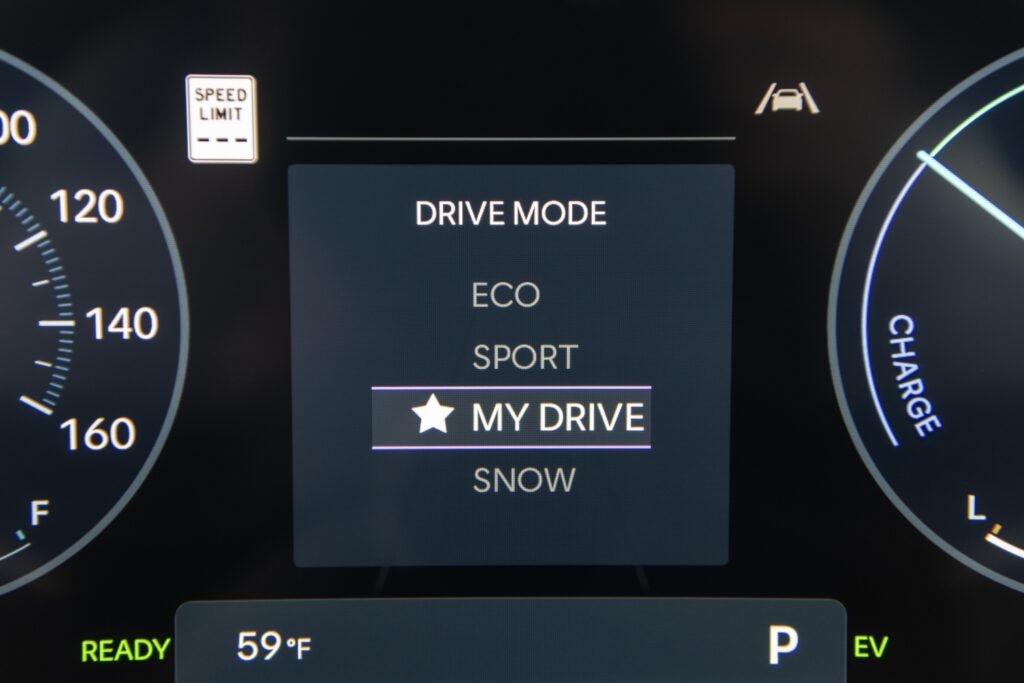
The gas engines are where the two feel most different. The Tucson’s 2.5-liter four makes 187 horsepower and 178 lb-ft, while the Santa Fe’s turbocharged 2.5 makes 277 horsepower and 311 lb-ft, which is 133 lb-ft more. The bigger SUV pays for it at the pump, with the EPA rating a front-drive Tucson at 28 mpg combined and an estimated $2,150 a year against 24 mpg and $2,500 for a front-drive Santa Fe, a gap of $350. With all-wheel drive the figures are 26 and 23 mpg, or $300 a year apart, and the Santa Fe XRT drops to 21 mpg.
The hybrids close that gap almost entirely because they share one system, a 1.6-liter turbo four with an electric motor making 231 horsepower and 271 lb-ft in both. The Tucson Hybrid with all-wheel drive is rated at 36 mpg combined and the Santa Fe Hybrid with all-wheel drive at 35 mpg, and their estimated annual fuel costs are only $50 apart. The front-drive Tucson Hybrid and the Hybrid Blue SE reach 38 mpg, and the Tucson Plug-in Hybrid adds 32 miles of electric range for owners who can charge at home.
Space, Towing and Safety
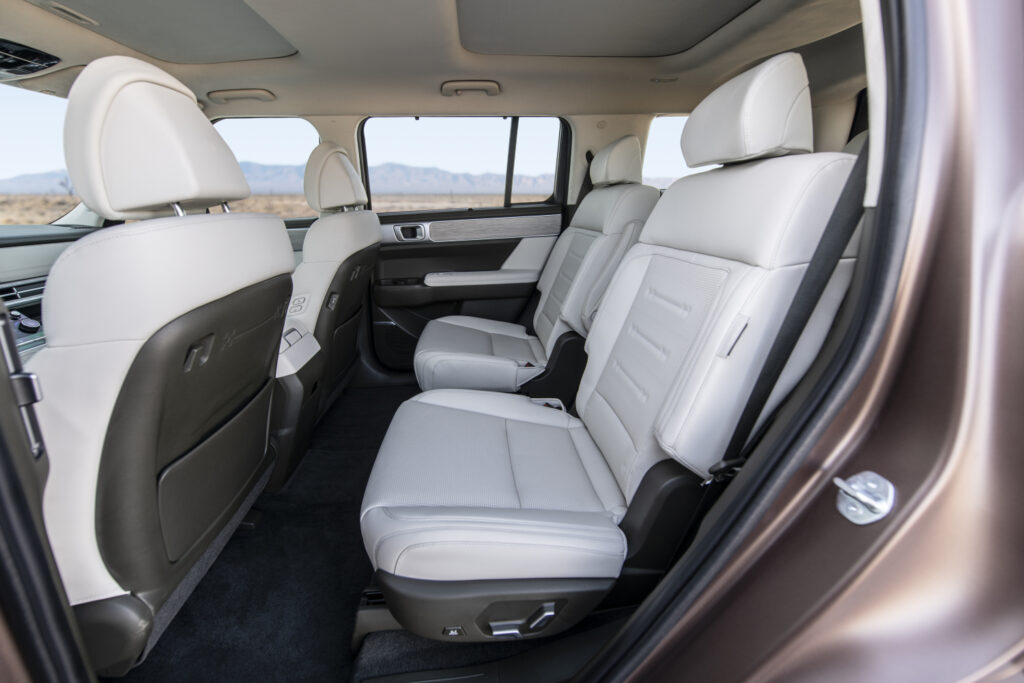
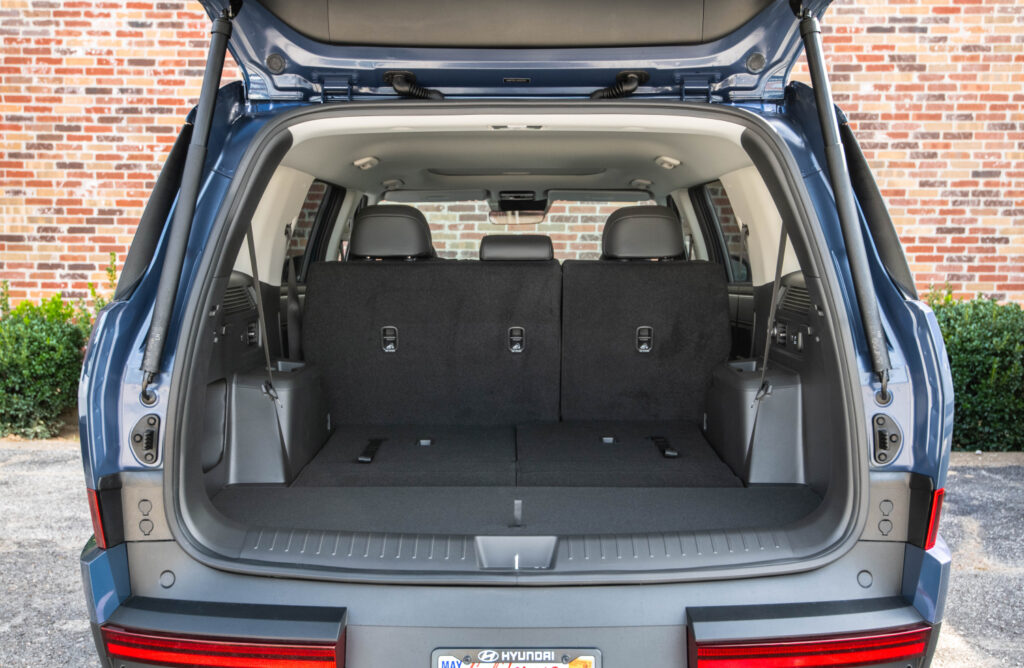
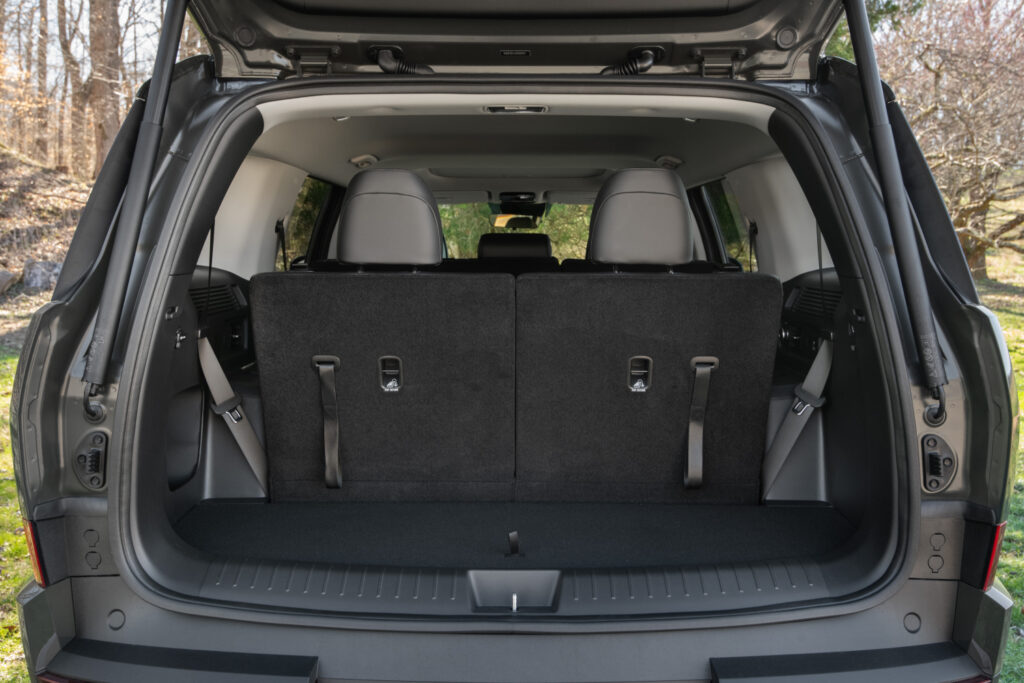
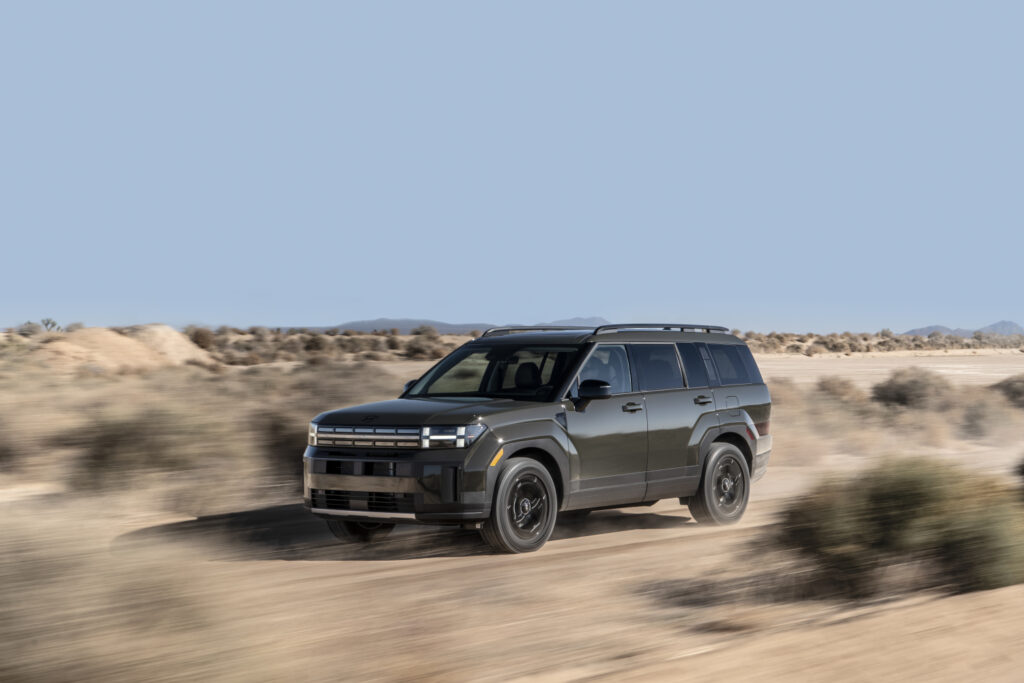
The Santa Fe is 7.5 inches longer than the Tucson, with 2.3 inches more between the axles, and nearly all of that goes into its third row, which has 30.0 inches of legroom. With that row folded, the Santa Fe has only 1.8 cubic feet more space behind the second row than a gas Tucson on the same SAE measure, and 4.8 more with every seat folded, so a buyer who never uses the extra seats gains surprisingly little cargo room. Behind the third row there are 14.6 cubic feet, enough for groceries but not for a family’s luggage.
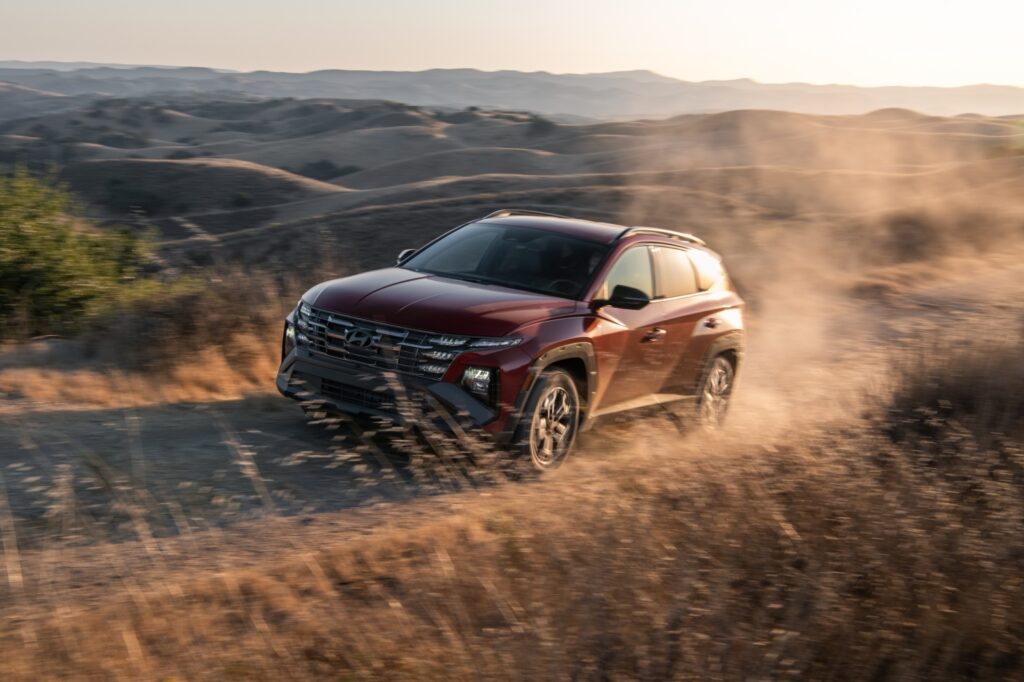
Towing is the other practical difference. A gas Santa Fe is rated for 3,500 pounds and the XRT for 4,500, against 2,750 for a gas Tucson, while every hybrid of either model stops at 2,000 pounds. An all-wheel-drive Tucson already matches the Santa Fe XRT’s 8.3 inches of ground clearance, according to the 2026 Tucson spec sheet.
Safety and ownership are a draw. Both earn a 2026 Top Safety Pick+ from the IIHS, for the 2026 Tucson and the 2027 Santa Fe, both carry a five-star overall rating from NHTSA, and both come with Hyundai’s five-year or 60,000-mile basic warranty and ten-year or 100,000-mile powertrain coverage. The November 2026 incentives are in our Tucson deals and Santa Fe deals pages.
The HyundaiHQ Take
Buy the Tucson if five seats will do for the life of the car, because it is cheaper to buy and run at every trim and the hybrid gives up nothing in power to the Santa Fe. The best Tucson value sits in the middle of the range, where the Hybrid SEL and SEL Premium carry most of what a family needs; once a Tucson shopper is looking at a Limited, the money has reached Santa Fe territory and deserves a second look.
Buy the Santa Fe if you need the third row, tow more than 2,750 pounds or want real performance from a gas engine, and buy the SE or SEL rather than stretching for a loaded Tucson, since the same money brings more space, more power and more seats. The full step up of $5,175 to $7,065 at matching trims is worth paying only for those needs. For a buyer who simply wants more cargo room, the numbers show the Santa Fe barely delivers it, and a Tucson Hybrid is the smarter purchase.
Related
Tucson or RAV4: The Toyota Sips Less, the Hyundai Costs Less
The Hyundai Tucson undercuts the Toyota RAV4 at every matched trim, by $1,000 between the cheapest hybrids.
Half the Year’s Best-Brand Trophies Just Went to Hyundai and Genesis
Hyundai Motor Group came away with three of the six brand awards handed out for 2027.

The New Elantra Gets Its American Debut This Thursday
Hyundai will unveil the all-new 2027 Elantra and the 2028 Elantra Hybrid at the Los Angeles Auto Show on Thursday, November 19, in a global reveal that starts…
Comments (0)
Join the discussion