Genesis Gave the GV90 Its Thickest Glass Ever
Every window on the 2028 Genesis GV90 uses acoustic laminated glass at least 5.0 millimeters thick, a first for the brand and one of several measures that Genesis says cut cabin noise by three decibels.
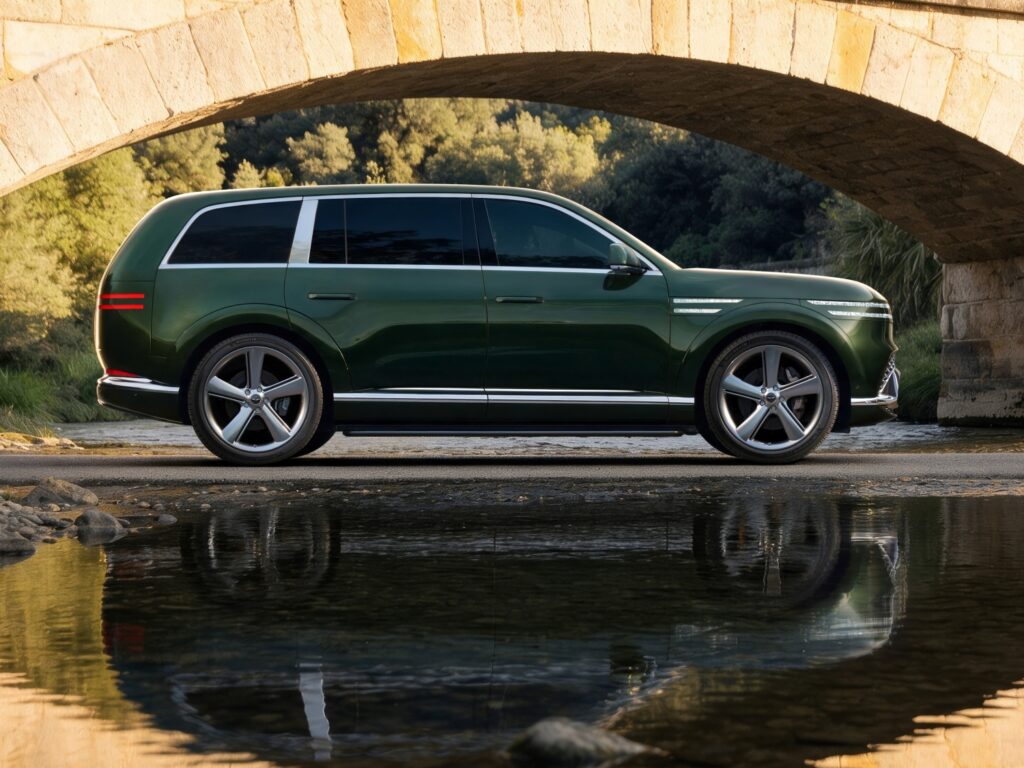
Every window on the 2028 Genesis GV90 uses acoustic laminated glass at least 5.0 millimeters thick, a first for the brand and one of several measures that Genesis says cut cabin noise by three decibels.
The side windows and the glass roof go further still, with 5.7-millimeter panes that sandwich a sound-absorbing film between two layers of glass. The glass is one half of the story Genesis is telling about its flagship electric SUV; the other is a chassis tuned so that a three-row SUV with 657 horsepower stays level and planted. Multi-chamber air suspension is standard on every GV90, electronic limited-slip differentials sit on both the front and rear motors in a first for Hyundai Motor Group, and the suspension geometry was reworked against the company’s benchmark competitors.
The details come from the third of Genesis’s GV90 technical releases, published October 27 and built around Sungki Jung of Genesis Vehicle Testing Group 1. "Outstanding driving performance is determined in places you cannot see, and it begins with suspension geometry," Jung said. His team gave the front suspension 42 millimeters of caster trail for stronger self-centering and a weightier steering feel, lowered the front roll center by 20 millimeters relative to the competitors it benchmarked to fight the body lift SUVs show in corners, and added anti-lift geometry to keep the nose down under hard acceleration.
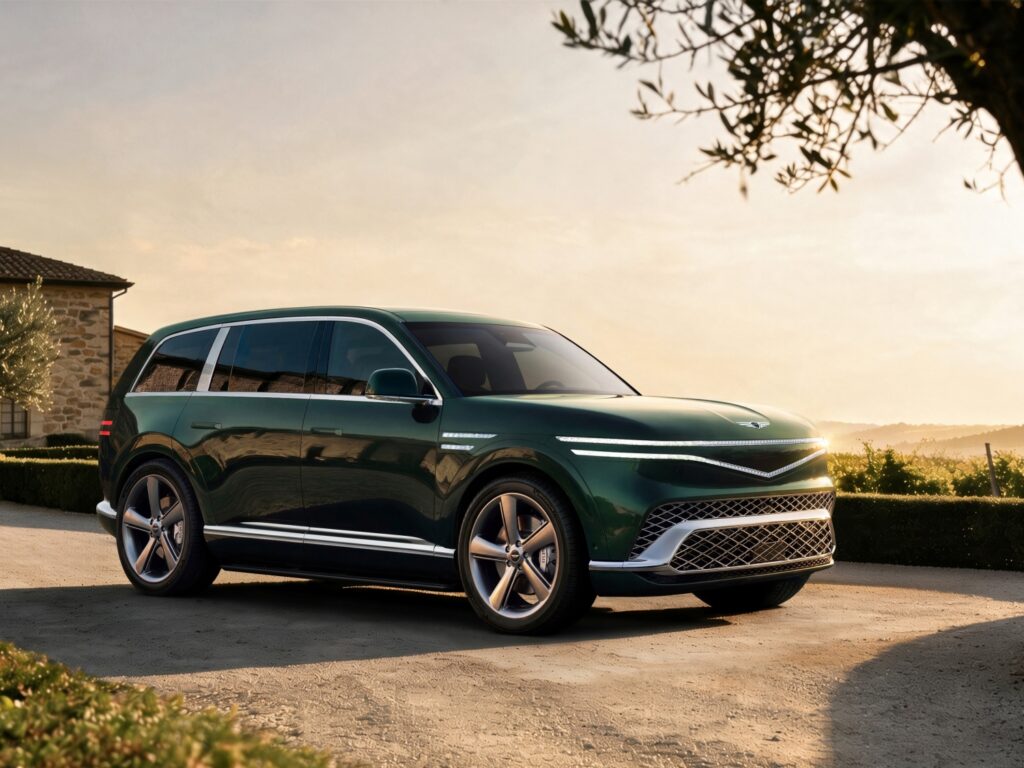
At the rear, hydraulic bushings in the crossmember absorb road vibration and a stiffer stabilizer bar raises roll stiffness by 17 percent and lateral stiffness by 13 percent over the same competitors, with Sport mode adding another 15 percent of roll stiffness. The air springs each contain two chambers that open together for a soft ride in normal driving and close one at a time to firm up in fast cornering or at highway speed. The system also raises the body 35 millimeters on rough surfaces, drops it 15 millimeters in Sport mode, lowers it 25 millimeters for entry and exit, and can lower the rear by up to 40 millimeters for loading cargo. Monotube dual-valve adaptive dampers handle compression and rebound through separate valves so damping adjusts continuously instead of stepping between presets.
The dual e-LSDs use brushless AC motor actuators to meter torque between the inside and outside wheels in a corner and away from a slipping wheel on snow, wet pavement or gravel. "Limited-slip differentials, such as an e-LSD, are often seen as technologies reserved for sports cars or high-performance vehicles, but we saw it differently," Jung said.
Quiet got the same attention as handling. Beyond the glass, dense insulation pads line the dash partition, floor, wheel arches and cargo area, and Genesis changed its assembly process to fit sound-absorbing material around underfloor wiring runs that would otherwise carry noise into the cabin. High-expansion acoustic foam injected at six points in the body frame swells to 45 times its volume to seal hollow sections, which Genesis says trims mid- and high-frequency noise by up to three decibels in standardized testing. The electric motors get a software fix as well: the control unit feeds an opposing waveform into the current to cancel motor whine at the source, and 80 percent of the motors and controllers are now wrapped in sound insulation. In the four-seat GV90 Neolun Executive Suite, a Comfort Partition behind the second row blocks resonance from the cargo area, which Genesis says gives rear passengers the sound levels of a luxury sedan.
Genesis has not announced US pricing or a launch date for the GV90, which it unveiled in San Francisco on August 19 with a 123.5-kilowatt-hour battery, an estimated 310 miles of range for the seven-seat version, rear-wheel steering that turns the rear wheels up to five degrees and 24-inch forged wheels.
The HyundaiHQ Take
None of this is glamorous, which is exactly why it matters. Coach doors and a pop-up television will get the GV90 into showrooms, but a 5,000-pound-class electric SUV lives or dies on whether it rides and sounds like the money, and Genesis is describing the kind of millimeter-level chassis work and acoustic obsession that Lexus built its reputation on with the first LS. If the production car delivers the three-decibel improvement and the composure Genesis promises, the GV90 will have the quiet, settled character that buyers in this class actually pay for, and that is a harder thing to copy than a door.
More from HyundaiHQ
Related
Genesis Says the GV90 Is Stiffer Without Its B-Pillar
The 2028 Genesis GV90 Neolun gives up its B-pillar for coach doors that open toward each other, and Genesis says the result is 12 percent stiffer than the…
Every 2027 Kia EV9 Land Is Now a Nightfall Edition
The 2027 Kia EV9 Land comes standard with the Nightfall Edition package, which makes the blacked-out, torque-boosted version of the three-row EV the only way to buy the…

Hyundai Made More Money on Fewer Cars Last Quarter
Hyundai Motor Company's operating profit rose 5.5 percent to 2.68 trillion won in the third quarter even though it shipped 11.3 percent fewer vehicles.
Comments (0)
Join the discussion