Condensation Is Freezing Inside Some Hyundai Hybrids
Hyundai is updating the engine software on a large group of Santa Fe and Tucson hybrids and plug-in hybrids.
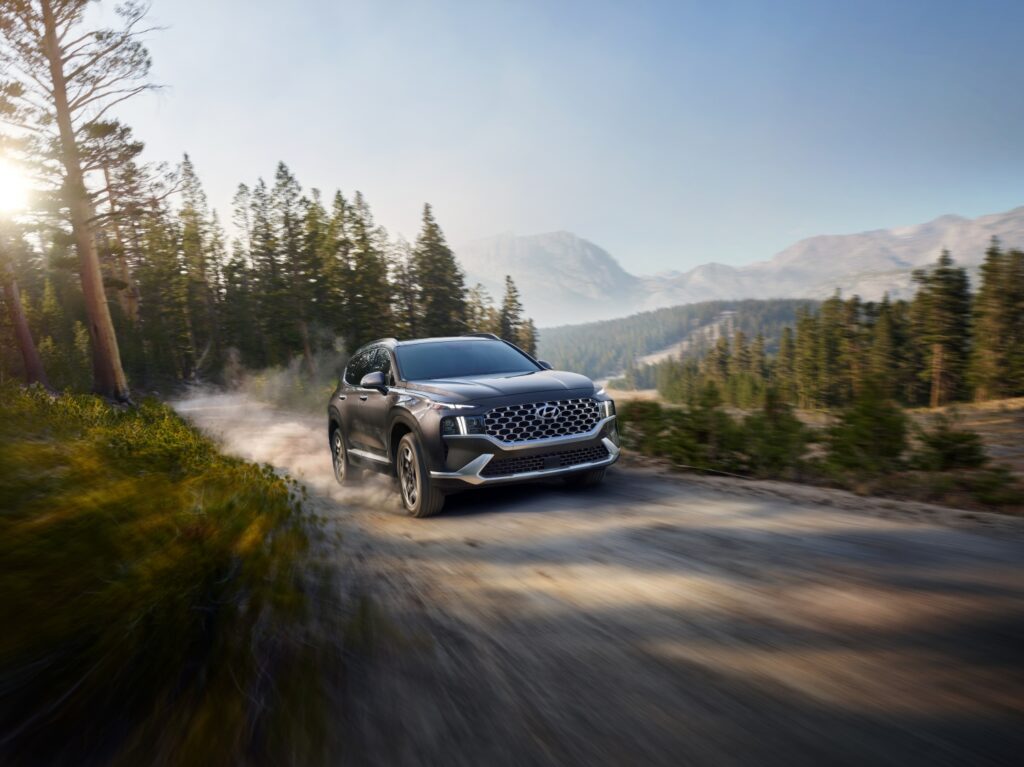
Hyundai is updating the engine software on a large group of Santa Fe and Tucson hybrids and plug-in hybrids. Water building up inside their exhaust gas recirculation system can freeze the intake air line and corrode the EGR valve, and the new software is Hyundai’s answer. The fix is a free reflash of the engine control module, and Hyundai pays its dealers 0.4 hours of labor to do it.
The work covers certain 2021 to 2023 Santa Fe Hybrids, 2022 and 2023 Santa Fe Plug-in Hybrids, and 2022 to 2024 Tucson Hybrids and Tucson Plug-in Hybrids. It is a service campaign rather than a safety recall, so owners of affected cars should find it listed as an open campaign when they check their VIN with Hyundai or ask a dealer, and dealers are told to do it during an owner’s current appointment if time allows.
The details come from Hyundai Motor America’s dealer notification for Service Campaign 9C7, dated October 8, 2026, which the company filed with the National Highway Traffic Safety Administration. It sends technicians to technical service bulletin 26-01-081H for the procedure. The notification does not say how many vehicles are involved.
| Model | Model years | Built |
|---|---|---|
| Santa Fe Hybrid | 2021-2022 | December 18, 2020 to September 28, 2022 |
| Santa Fe Hybrid | 2023 | October 10, 2022 to December 29, 2023 |
| Santa Fe Plug-in Hybrid | 2022-2023 | May 13, 2021 to September 14, 2023 |
| Tucson Hybrid | 2022-2024 | January 20, 2021 to July 8, 2024 |
| Tucson Plug-in Hybrid | 2022-2024 | June 30, 2021 to July 5, 2024 |
According to the notification, the excess condensation "can lead to drivability concerns," and Hyundai lists ten diagnostic trouble codes that can come with it. They include P040400 for the EGR control circuit, P049D00 for the EGR control position exceeding its learning limit, P047100 for the exhaust pressure sensor, P012800 for coolant running below the thermostat’s regulating temperature, P050C00 for cold-start coolant temperature, two evaporative purge pump codes, P112000 for the inlet metering valve and P033500 for the crankshaft position sensor. An owner who has seen a check engine light with one of those codes on one of these cars now has a likely explanation.
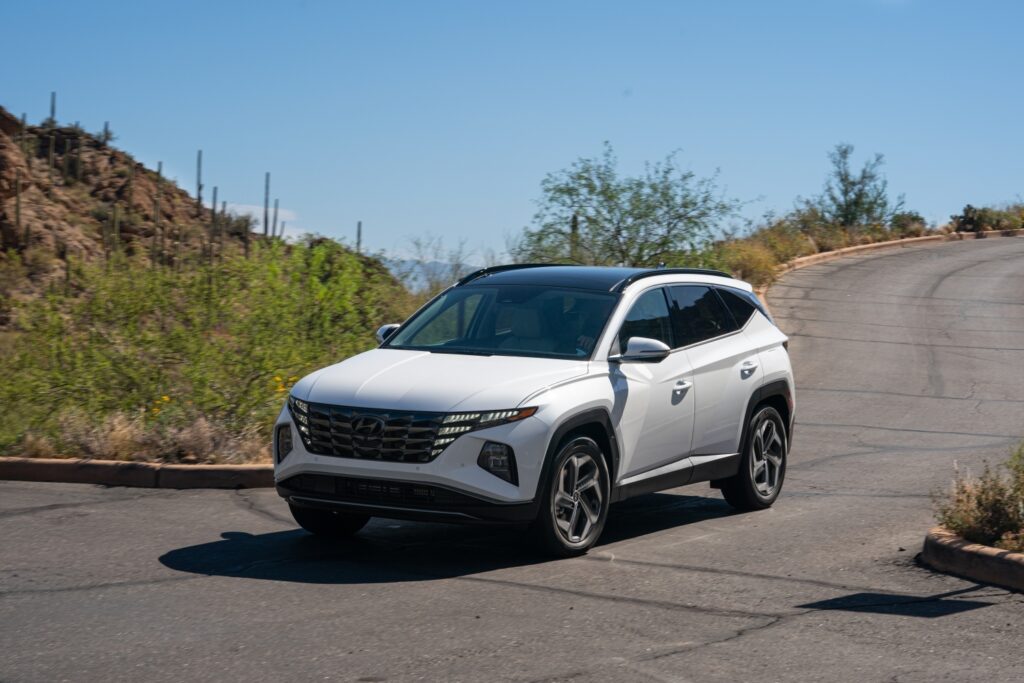
Hyundai treats the update as emissions work. Every car gets a campaign sticker under the hood once the software is installed, and owners in California, Colorado, Connecticut, Delaware, Massachusetts, Maryland, Maine, New Jersey, New York, Oregon, Pennsylvania, Rhode Island, Vermont and Washington also receive a vehicle emission proof of correction card. Dealers have to photograph the success screen of the update as proof the work was done.
The service script Hyundai gives its dealers tells owners the update is done "at no cost to you," and dealers are told to offer a Hyundai service rental if the car has to stay overnight, or a third-party rental or rideshare if none is available. Owners who are not comfortable driving the car before the repair can also ask for a loaner or other transportation at no charge, according to the notification.
The HyundaiHQ Take
The timing matters more than the paperwork. A problem that starts with water freezing in the intake plumbing is a winter problem, and Hyundai has put the fix out just as the northern half of the country heads into its first hard freezes, which is the right moment for owners to get it done before the codes show up. The 0.4-hour labor time makes this an easy add-on to an oil change, so anyone with one of these hybrids should check their VIN now rather than wait for a letter. What Hyundai has not said is whether new software can stop condensation from corroding a valve that has already been sitting in it for three or four winters, and owners of the oldest cars on this list should ask their dealer to look at the valve while the car is in.
More on the Tucson
Related
2025-2026 Hyundai Models Recalled Over Instrument Panel Issue
In January 2026, Hyundai Motor America began recalling select 2025-2026 Hyundai vehicles across 7 models over a gauge cluster that may fail.
2023-2026 Genesis and Hyundai Models Recalled Over Seat Belt Issue
In April 2026, Hyundai Motor America began recalling select 2023-2026 Genesis and Hyundai vehicles across 3 models over a seat belt issue.

Hyundai Had a New Best Seller in Its Record October
The Santa Fe was Hyundai's best-selling vehicle in America in October, edging out the Tucson by 151 units in a month when Hyundai Motor America set an October…
Comments (0)
Join the discussion