One Small Supplier Will Feed Every 2028 Hyundai Fuel Cell
A small Korean carbon materials company is set to become the sole supplier of a key fuel cell part for Hyundai's 2028-model hydrogen vehicles.
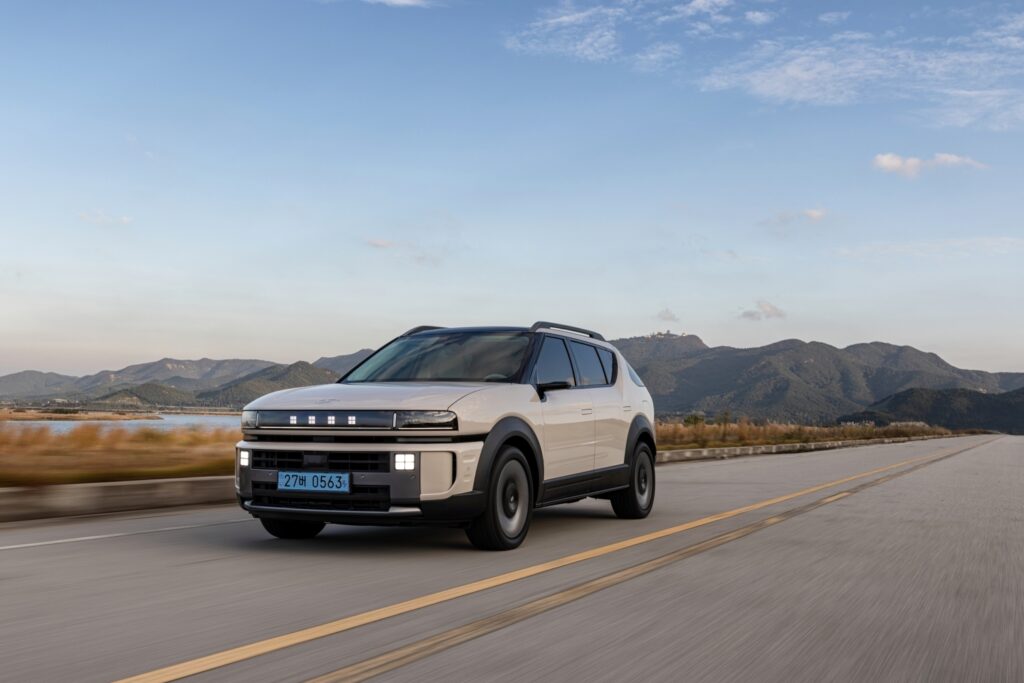
A small Korean carbon materials company is set to become the sole supplier of a key fuel cell part for Hyundai’s 2028-model hydrogen vehicles. Mass production of the gas diffusion layers starts in 2028 with supply volumes locked in for the following six years, and the part sits at the heart of a fuel cell stack that until recently depended on imports.
A gas diffusion layer is a sheet of porous carbon that spreads hydrogen and oxygen evenly across the catalyst layers of a fuel cell, carries away the water the reaction produces and keeps the moisture inside the stack in balance, which affects both output and durability. The supplier, JNTG, developed a domestic alternative to the imported material, and the business is still small for it: gas diffusion layers brought in 4.7 billion won in 2025, about 6.5 percent of its revenue, a share the company expects to grow once Hyundai deliveries begin.
The report comes from THE ELEC, a Korean electronics industry outlet, which published it on November 6 as JNTG prepares a stock market listing. Hyundai itself has not confirmed the arrangement, so the sole-supplier status should be treated as the outlet’s reporting until the automaker or the supplier confirms it in a filing. JNTG chief executive Jang Jae-won presented the company’s plans at an initial public offering press conference in Yeouido, Seoul, on November 5.
The numbers behind that listing explain why the Hyundai contract matters so much to a company most buyers have never heard of. JNTG’s revenue has climbed from 5.7 billion won in 2021 to 72.4 billion won in 2025, when it earned an operating profit of 21.3 billion won after an operating loss of 4.9 billion won in 2024. In the first half of 2026 alone it booked 60.7 billion won in revenue and 18.1 billion won in operating profit, and it projects more than 100 billion won in revenue for the full year. Carbon electrodes for non-lithium batteries are the main business today, at roughly 74 percent of 2025 sales.
The offering targets the Kosdaq market in November, with 4.3 million shares at an indicative range of 26,400 to 31,900 won each. Institutional bookbuilding runs from November 3 to 9, public subscription follows on November 12 and 13, and Daishin Securities is lead underwriter with NH Investment and Securities as co-underwriter. JNTG hopes to raise up to 130 billion won and plans to put more than half of it into capacity, tripling annual gas diffusion layer output from 1 million to 3 million square meters, lifting carbon electrode capacity from 2.4 million to 3.6 million square meters and raising production of carbon substrates for electrolysis and distributed power from about 1 million to 1.5 million sheets a year, with each step timed to customer forecasts and long-term supply agreements.
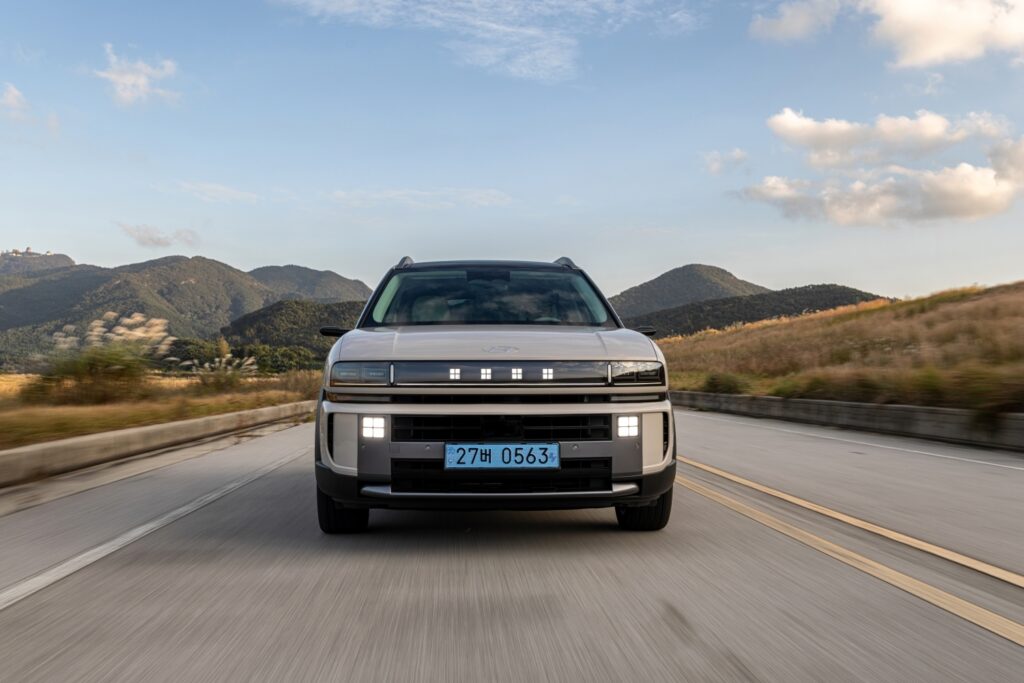
For American drivers, the vehicle in question is almost certainly the Nexo, Hyundai’s only hydrogen passenger car. The second-generation Nexo was unveiled on April 2, 2025 at the Seoul Mobility Show with a fuel cell stack rated at 110 kW gross, a 16 percent gain, total system output of 190 kW, a 0 to 100 km/h time of 7.8 seconds and a targeted range of more than 700 km on the Korean test cycle from a five-minute fill. Hyundai Motor America lists the new Nexo on its press site as an all-new model but has published no US pricing or on-sale date, and the outgoing model was sold through only four California dealerships, two in Northern California and two in Southern California, as of September 2020. A 2028-model supply contract suggests Hyundai expects to keep building hydrogen cars well into the next decade, whatever the pace of the US launch.
The HyundaiHQ Take
Hydrogen cars are a rounding error in Hyundai’s US sales, which makes it easy to dismiss a story about a carbon sheet supplier going public in Seoul. The more interesting signal is the timeline. Hyundai is signing six-year supply deals for a fuel cell generation that will not reach production until 2028, which tells you the company has no intention of walking away from the technology the way most rivals have. The risk for Nexo buyers is a different one: a single source for a critical stack component means a single point of failure, and that is worth watching once the cars arrive.
Related
Hyundai Built a Hydrogen Maker That Scales to Hundreds of Megawatts
Hyundai Motor Group is showing a 5-megawatt hydrogen production system this week that builds twelve modular electrolysis stacks into a unit able to make about 700 metric tons…
Hyundai Kona Deals for November 2026: Leases From $239 a Month
Hyundai is offering the 2026 Hyundai Kona SEL Sport on a lease from $239 a month and financing from 3.49% for 60 months on the 2027 Hyundai Kona…
Hyundai Loses an Eight-Year Fight Over Two Oil Spills
South Korea's Supreme Court has let stand the fines against Hyundai Motor and an Asan plant safety manager over two waste oil spills in 2018.
Comments (0)
Join the discussion