North America Is Now Carrying Hyundai
Hyundai Motor Company's retail sales fell 10.1 percent worldwide in the third quarter, but North America grew 3.2 percent and set a nine-month record.
Hyundai Motor Company’s retail sales fell 10.1 percent worldwide in the third quarter, but North America grew 3.2 percent and set a nine-month record. That leaves the US as the one major market still pulling the company forward.
The quarter’s 931,211 global sales bring the nine-month total to 2,879,590, down 5.1 percent, while North America’s 325,098 for the quarter pushed its nine-month total to 920,555, the best in the region’s history. Korea fell 26.7 percent in the quarter to 133,515 as a prolonged strike cut production, Europe dropped 18.3 percent to 122,345 as buyers turned to small EVs from newer rivals, China was cut in half at 14,674, and the Middle East and Africa fell 30.1 percent because conflict around the Red Sea and the Strait of Hormuz left distributors short of inventory. India, up 9.5 percent to 150,039, was the only other large region to grow.
Hyundai published the regional figures on October 29 alongside its quarterly results. "We are starting the largest product expansion in our history and continuing to invest in local production to better respond to changing market conditions," the company said. North America hybrid sales grew 56 percent to 229,187 units through September, and Hyundai said hybrid demand in the US, Canada and Mexico held sales up while the strike and the shipping disruptions pulled other regions down.
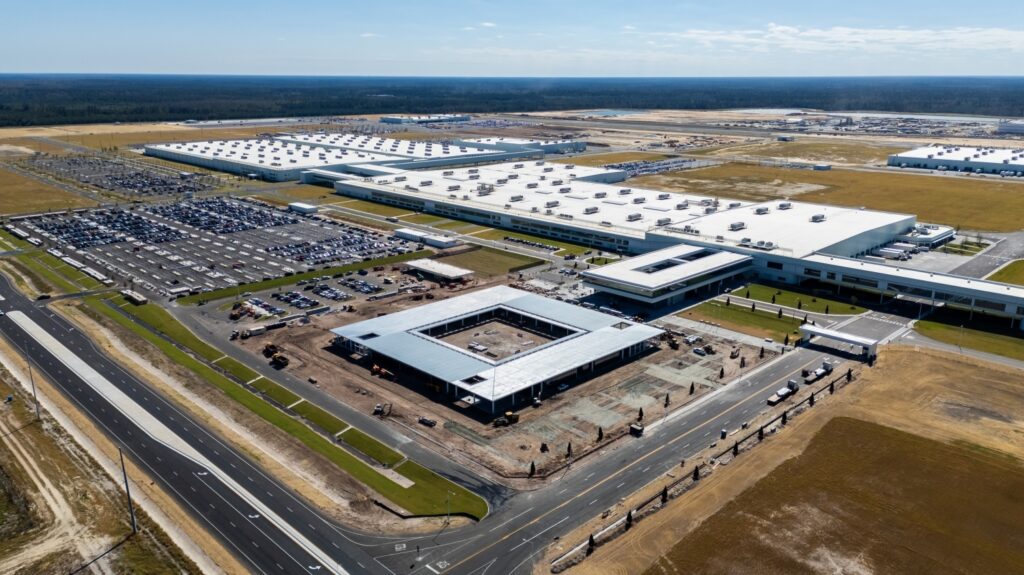
In the US, Hyundai and Genesis delivered 759,197 vehicles in the nine months, up 3 percent, with Hyundai’s 246,896 third quarter its best ever and Genesis up 6 percent to 22,645, its strongest third quarter in the market. Hyundai said 58 of the more than 100 product launches it plans by 2030 are aimed at North America, that it is adding 500,000 units of US manufacturing capacity, and that it wants hybrids to be half of its sales by 2030. It also said Motional, the group’s robotaxi company, plans to start driverless service with Uber in Las Vegas by the end of 2026, and that production of the first US-built Ioniq 5 robotaxis for Waymo begins this year.
For US buyers that means the bulk of Hyundai’s new models over the next four years are being planned around this market, and more of them will be built here. The Genesis GV80 Hybrid and an extended-range Genesis EV are due in 2027, and on the earnings call Hyundai said the new Tucson reaches North America in the fourth quarter with the Genesis GV90 following early next year, according to a transcript.
The HyundaiHQ Take
A company that sells a third of its cars in one region and is losing ground in nearly every other one is not diversified, whatever the map says, and Hyundai’s own numbers now make that plain: Europe is sliding, China is a rounding error and the home market just lost a quarter of its volume to a strike. That makes the 58 North American launches less a growth plan than a dependency, and it is the right dependency to have only as long as American hybrid buyers keep showing up. They have so far, which is why Alabama and Georgia are getting the money, but it also means a soft US market would hit Hyundai harder than it would hit Toyota, which still has Japan and Southeast Asia to fall back on.
Related
The Genesis G70 Loses Its V6 for 2027
The 2027 Genesis G70 will be sold only with the 2.5-liter turbocharged four-cylinder, which ends the twin-turbo 3.3-liter V6 that gave the compact sedan its sports-sedan credentials since…
Kia Set a Sales Record in September While Its EVs Fell
Kia America sold 77,009 vehicles in September, its best September ever, and pushed third-quarter sales to a record 236,659.

All-New Tucson Debuts in New York With a 42-MPG Target
The all-new 2027 Hyundai Tucson made its world premiere in New York on October 1 as a bigger, squarer compact SUV with a hybrid Hyundai is targeting at…
Comments (0)
Join the discussion