Norway’s Wealth Fund Could Still Undo Hyundai’s Headlight Sale
Hyundai Mobis shareholders voted on November 24 to carve out the company's lighting business, the last vote needed before a 600 billion won sale of the unit to the French supplier OPmobility.
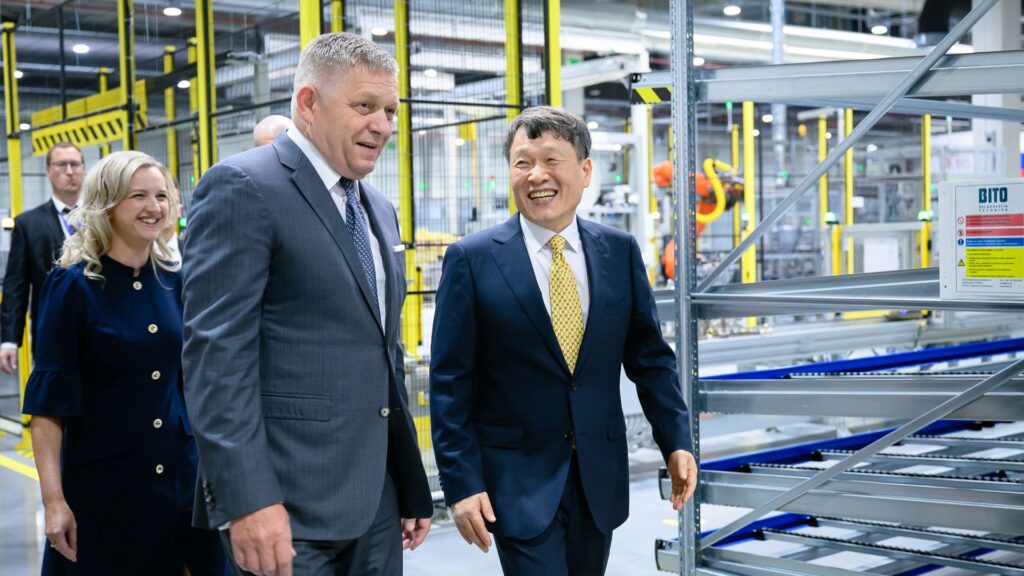
Hyundai Mobis shareholders voted on November 24 to carve out the company’s lighting business, the last vote needed before a 600 billion won sale of the unit to the French supplier OPmobility. The headlamp and rear-lamp business will become its own company on April 1, 2027, and Mobis will then hand all of its shares to the buyer.
The vote does not settle the deal. Shareholders who opposed the split now have until December 14 to demand that Mobis buy back their stock at 408,394 won a share, and if those claims add up to more than 230 billion won, the Mobis board can call the whole separation off.
The result of the extraordinary meeting, held at the GS Tower in Seoul’s Gangnam district, was reported by Minju Shinmun. A company split is a special resolution under Korean law, so it needed the support of two thirds of the votes cast and at least a third of all issued shares. Hyundai Mobis had not published its own statement on the result at the time of writing.
What OPmobility Is Buying
OPmobility signed the final agreement on September 30, and its own announcement gives the scale of the business it is taking over. Last year the unit made money on 2.5 trillion won of sales, and its five factories sit in Korea, China, the Czech Republic and Mexico. OPmobility is aiming to close in the second half of 2027, once antitrust and other regulators have signed off.
The Korean company being split off is a narrower slice of that operation. According to Asia Times Korea, the new entity carried assets of 541.5 billion won and liabilities of 165.5 billion won at the end of 2025, and its domestic business booked about 1.022 trillion won in sales last year.
Félicie Burelle, who runs OPmobility, expects the purchase to make her company stronger across Asia, Europe and North America, and she added that "above all, it will further deepen our partnership with Hyundai and Kia."
Why Mobis Wants Out
Lee Gyu-suk, the chief executive of Hyundai Mobis, said the board had studied the deal "from an independent standpoint" to judge whether it served the long-term interest of all shareholders, weighing the value it unlocks and how well it fits the company’s mid- to long-term strategy. He said the auto industry is shifting quickly toward electrification, software-defined vehicles, autonomous driving, connectivity and robotics, and called the sale part of a strategy of "selection and concentration." Mobis plans to put the money and management attention into electrification, electronics, software and robotics.
The opposition has come from inside the company and from some of its investors. On November 19, the Seoul Central District Court threw out an injunction request from 341 Mobis office and research employees, who argued that splitting the unit off and then selling it amounted to a business transfer that should have let them refuse to move with it, according to Asia Times Korea. Minority shareholders have also questioned whether 600 billion won is a fair price for the business.
The biggest open question is Norway. Aju Business Daily reported on November 23 that Norges Bank Investment Management, which runs Norway’s sovereign wealth fund and holds Mobis shares, had decided to vote against the split, and that a buyback claim from the fund alone could reach 470 billion won, roughly double the threshold at which the board may drop the plan. The paper said the Mobis office workers’ union had written to several foreign institutional investors urging them to exercise buyback rights and that some had responded positively.
The friendly stakes on Hyundai’s side were always likely to carry the vote. Aju put them at about 33 percent, led by Kia at 18.29 percent, honorary chairman Chung Mong-koo at 7.55 percent and Hyundai Steel at 6.13 percent. A Mobis official told the paper that crossing 230 billion won in claims does not force the company to withdraw, and that the board will decide after the claims are in, weighing its financial position.
What It Means for US Buyers
Nothing changes on a Hyundai, Kia or Genesis in an American showroom yet. If the sale closes, though, the lamps on many of the group’s cars would come from a French-owned supplier rather than a Hyundai company, and OPmobility has said it expects the deal to grow its business in North America, where the Mobis lighting unit already has a plant in Mexico. The deal also frees Mobis to spend on the electronics and robotics work it now treats as its future.
The HyundaiHQ Take
Hyundai always had the votes, so the meeting was never the real test. The three weeks to December 14 are, because a single large fund deciding to cash out could leave the Mobis board choosing between paying hundreds of billions of won to keep the deal alive or walking away from a sale it has spent most of the year arranging. Our bet is that Mobis keeps the deal and absorbs the buybacks, since its own official has already said the 230 billion won line is a right to withdraw, not a duty, and since a company betting its future on robots can hardly afford to look like it cannot let go of headlights.
Related
Kia Wants a Robot Under Your Seat to Clean Up After the Kids
Kia has patented a seat that cleans itself, using an in-car camera to spot a spill and a folding arm that comes out from under the cushion to…
Hyundai’s Coming Pickup Has No Buyers Yet, and It Knows It
Hyundai's coming body-on-frame pickup will have to take most of its buyers from other brands, because the company has never sold that kind of truck and has no…

Hyundai’s Hydrogen Arm Now Fuels a Quarter of Korea
A new hydrogen station on the eastern edge of Seoul opens for business on November 24, and it is the 60th one run by the Hyundai Motor Group…
Comments (0)
Join the discussion