Hyundai Wants First Call on a Vietnam Plant’s Battery Graphite
Hyundai Motor Group signed a letter of intent on November 3 to consider investing about 100 billion won, roughly $70 million to $74 million, in a battery materials plant under construction in Vietnam.
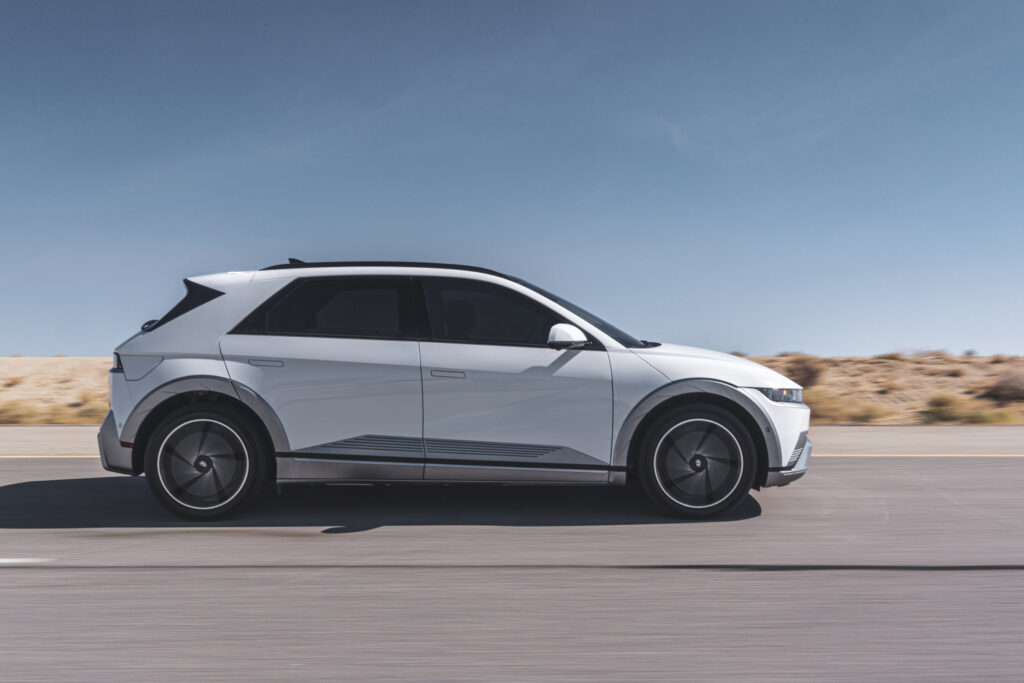
Hyundai Motor Group signed a letter of intent on November 3 to consider investing about 100 billion won, roughly $70 million to $74 million, in a battery materials plant under construction in Vietnam. In return the group would get priority rights to buy the plant’s synthetic graphite anode material, a key ingredient in the electric vehicle batteries it is working to bring under its own control.
The plant belongs to Posco Future M, the battery materials arm of the Posco steel group, and sits in Thai Nguyen Province in northern Vietnam. It is costing about 357 billion won, construction started in March, and mass production is scheduled for 2028. The size of Hyundai’s stake and the purchase terms are still to be negotiated, so the deal is not final.
The Korea Herald reported that Posco Future M announced the agreement on November 3 and that the two companies will also work together on early product development and quality testing so the material meets Hyundai’s EV performance requirements. Synthetic graphite anodes improve fast-charging performance and battery life, the paper said. Posco Future M already has customer orders for the plant’s first phase and is pursuing a second phase, and the Herald described it as South Korea’s only producer of both cathode and anode materials. The deal builds on an April 2025 memorandum between Hyundai and Posco covering steel and batteries.
The Seoul Economic Daily put the deal in the context of Hyundai’s push to bring EV battery production in-house, noting that batteries make up roughly 40 percent of an EV’s cost and that American rules on prohibited foreign entities in the battery supply chain, along with Europe’s Industrial Accelerator Act, are pushing automakers to lock down where their materials come from. The paper listed the group’s earlier moves, including a 5 percent stake in Korea Zinc bought in August 2023 for 527.2 billion won, which is to supply about half of the nickel Hyundai needs for US Inflation Reduction Act compliance by 2031, and lithium supply deals with Chengxin Lithium, Ganfeng Lithium and Chile’s SQM. Just Auto also reported the deal on November 4.
For the US, the most relevant part of that strategy is in Georgia, where Hyundai has two battery joint ventures: one with SK On rated at 35 gigawatt-hours a year and a separate one with LG Energy Solution rated at 30 gigawatt-hours. None of the reports say where the Vietnam graphite will be used or which vehicles it will go into. The Seoul Economic Daily added that Hyundai’s own battery cell will debut in an extended-range electric vehicle in the first half of 2027, that a lower-cost volume EV due in 2027 will use mid-nickel batteries, and that the group’s battery research campus in Anseong, South Korea, is due to be finished at the end of 2026.
The HyundaiHQ Take
A $70 million stake is small change for Hyundai, but the priority purchase rights are the point. US rules now punish automakers that cannot prove their battery supply chains avoid prohibited foreign suppliers, so a guaranteed source of anode material from a Korean partner is worth more than the equity. If even part of this output ends up in cells built in Georgia, it would be one more piece Hyundai needs to keep its American-built EVs competitive on price.
Related
Hyundai Jumps Two Places Among the World’s Most Valuable Car Brands
Hyundai ranked 29th in Interbrand's Best Global Brands 2026 report, released on October 28, with a brand value of $25 billion, and it climbed from sixth to fourth…
Hyundai Wants AI That Can Weigh a Trailer Without a Scale
Since October 16, Hyundai's technical center in Michigan has been recruiting an engineer to build AI that can estimate a trailer's weight, payload and tire grip without dedicated…
Hyundai Built a Hydrogen Maker That Scales to Hundreds of Megawatts
Hyundai Motor Group is showing a 5-megawatt hydrogen production system this week that builds twelve modular electrolysis stacks into a unit able to make about 700 metric tons…
Comments (0)
Join the discussion