Hyundai, Kia and Genesis Are Getting One Home Charger, and the US Is on the List
Hyundai Motor Group has designed one home charger for all three of its brands, replacing a mix of units that varied by brand and by country.
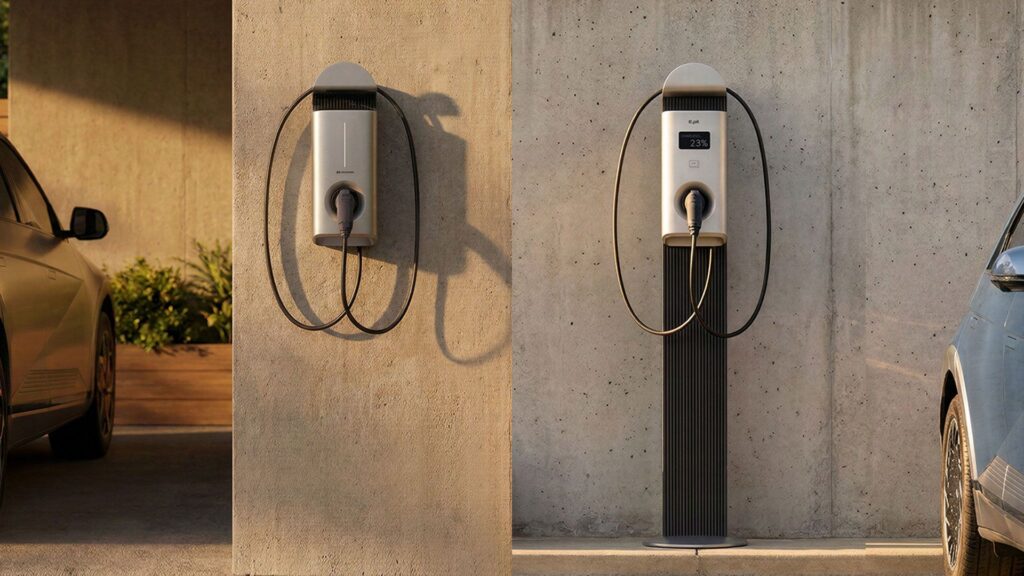
Hyundai Motor Group has designed one home charger for all three of its brands, replacing a mix of units that varied by brand and by country. Korean buyers get it first in 2027, and America, Europe and India follow one after another.
The charger comes in wall-mounted and freestanding versions. In Korea it is rated at 7 kW or 11 kW and uses the Type 1 (J1772) connector, and the group says each market will get the plug standard and output that suit its local charging setup when the charger arrives there.
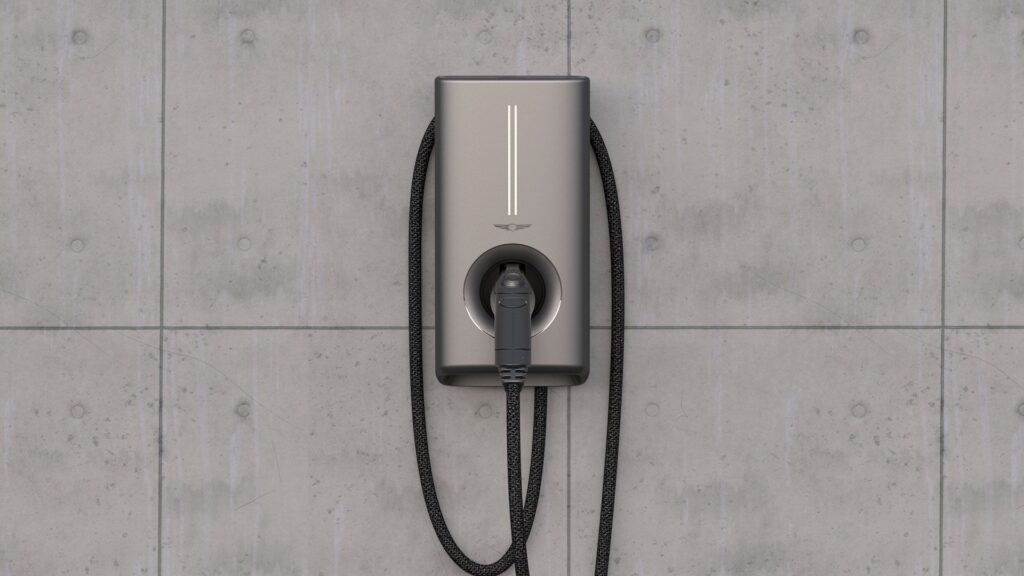
The group announced the charger, which it calls the HMG Global slow charger, on its Korean newsroom on November 25, and Yonhap reported it the same day. Hyundai and Kia led the planning, engineering and design, while Hyundai Kefico, the group company that makes vehicle control units and EV charging equipment, helped develop it and will build it.
Slow chargers like this one are what most electric car owners plug into every night, and the group points out that in Korea they hang in apartment parking garages, while overseas they mostly go in the garages of houses. The housing is split into a wiring section that stays on the wall and a charging unit that clips onto it, which the group says cuts installation to about 10 minutes and a replacement to about 5.
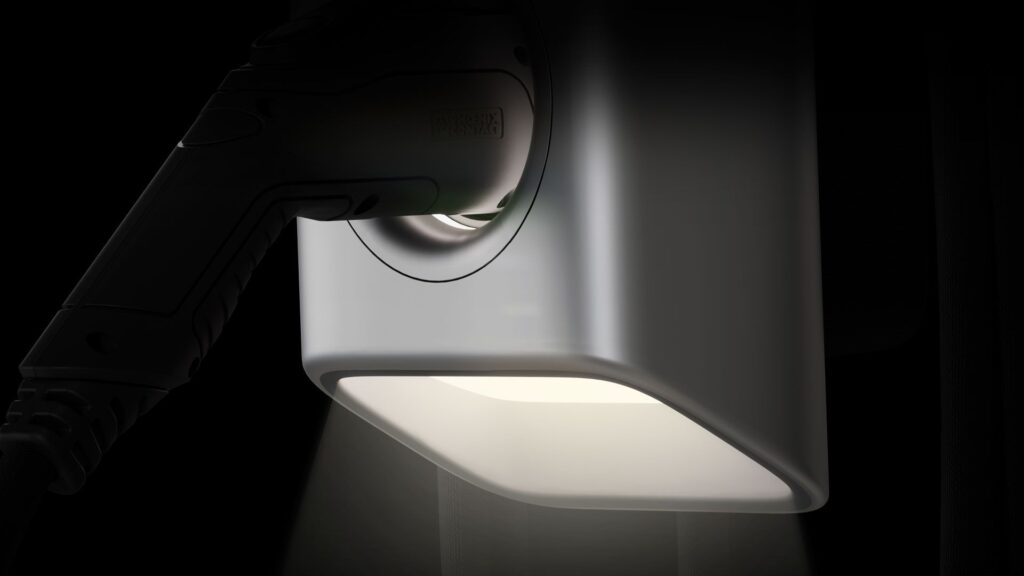
The design leans on customer and ergonomic data. Every edge a hand can touch is rounded, the connector holder and cable hanger were shaped for easy use, and a lamp on the underside lights the ground around the charger so it is easy to find in the dark.
The software side is where the charger goes beyond a simple box on the wall. The unit can be managed and checked remotely, diagnoses its own faults and takes software updates over the air, and the group plans to link it to the Hyundai, Kia and Genesis apps so owners can check charging status and history, schedule sessions and get alerts. It also brings Plug & Charge, which until now has mostly been offered on fast chargers, to slow charging, so plugging in handles the owner’s sign-in and payment automatically. In Korea that ties into a national Plug & Charge system the group built with the government, which it first showed on October 1 and plans to launch officially in February 2027.
The charger was also designed from the start to handle vehicle-to-home and vehicle-to-grid service later, so a parked car could one day send power back to a house or the grid. Before each regional launch, the group says it will test the charger for heat, humidity and thermal shock under a validation process modeled on how it checks electronic parts for its cars. "We will provide Hyundai Motor Group customers with a consistent, convenient and highly reliable charging experience anywhere," a group official said.
The HyundaiHQ Take
The US already has no shortage of Level 2 wall boxes, so the interesting part here is not the hardware but the fact that the carmaker will own the whole experience, from the app to the payment to a future in which the car powers the house. A single charger across three brands also means one product to support instead of a patchwork of partners. The open question for American buyers is the plug. The Korean version uses J1772, and the group has said only that each market will get the connector and output that suit it, without a US date or price, so how well it fits the cars in American garages will not be clear until it gets here.
Related

A GV70 or GV80 Magma Is Coming, Just Not on Today’s SUVs
Genesis is open to building Magma versions of its two best-known SUVs, the GV70 and GV80, but buyers hoping to find one on the current generation of either…

Genesis Thinks Its Next Magma Should Keep an Engine
The first Magma performance car from Genesis runs on batteries alone, but the man who plans its lineup says the next ones should probably have a gasoline engine…

The GV60 Magma Just Escaped California, New York and New Jersey
Shoppers in 11 more states can now buy the first performance car Genesis has built.
Comments (0)
Join the discussion