Six Years In, a Swiss Grocer Just Bought More Hydrogen Hyundais
One of the first companies to put Hyundai's hydrogen trucks to work has come back for more.
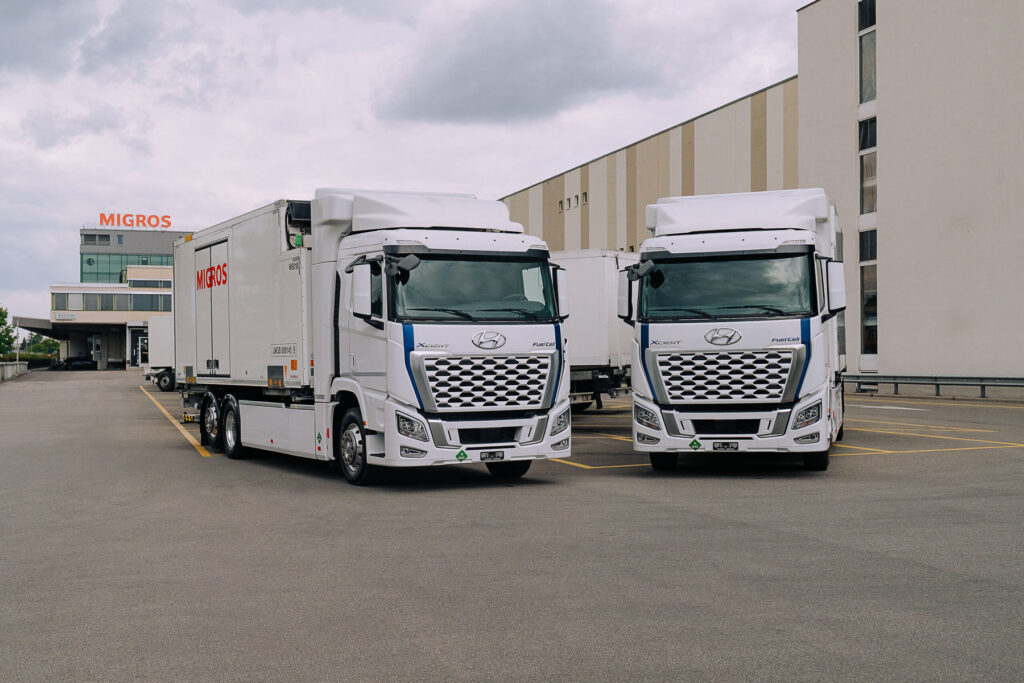
One of the first companies to put Hyundai’s hydrogen trucks to work has come back for more. The Migros Eastern Switzerland Cooperative, which has run XCIENT Fuel Cell trucks on its store deliveries since 2020, has taken delivery of two more, and these are the newer three-axle version built to haul heavier loads.
Each of the new trucks has three axles in a 6×2 layout and is rated to run at up to 42 tonnes all-in, counting truck, trailer and cargo. The extra axle lets them carry more payload than the earlier two-axle trucks, which matters to a grocer whose trailers mix heavy goods with light ones on the same run.
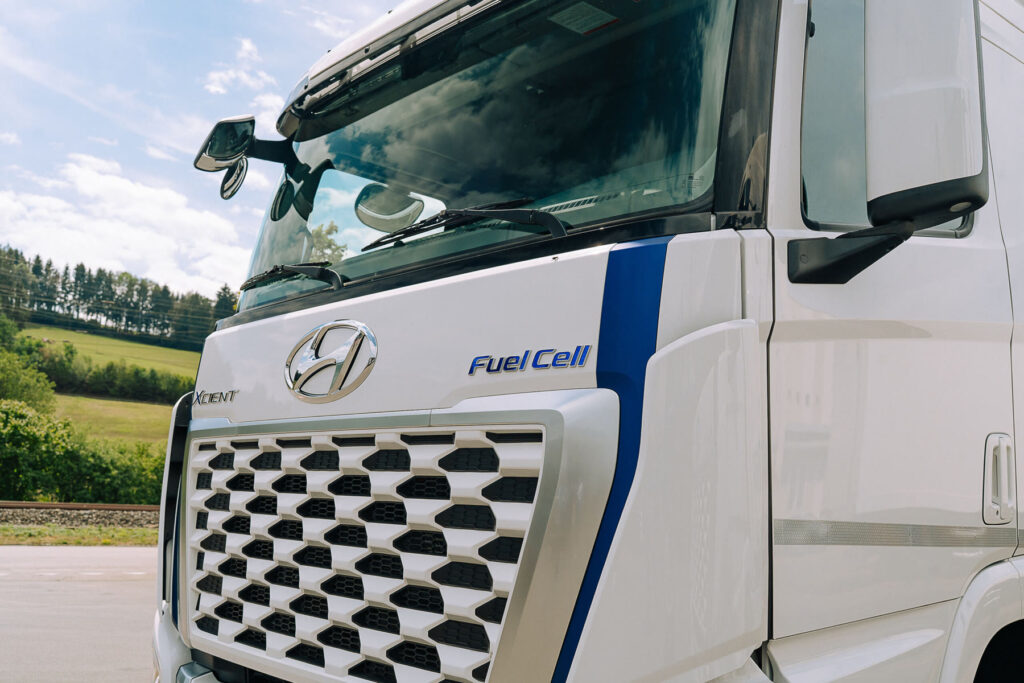
Hyundai Hydrogen Mobility, the wholly owned Hyundai Motor Company subsidiary that sells and services the trucks in Switzerland, announced the handover on November 18 in a release. Beyond the payload, it says this generation has a more efficient fuel cell system and better diagnostics and monitoring, meant to catch technical problems early and keep trucks off the lift. Hyundai puts the range above 400 km, about 250 miles, and a fill-up takes only a short stop.
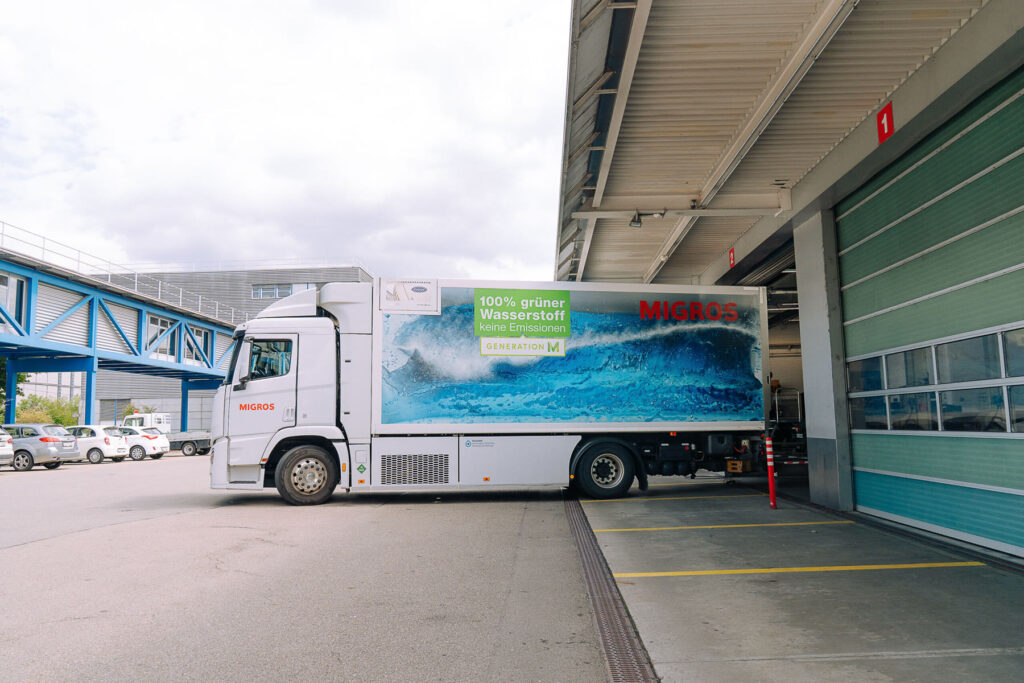
Migros framed the purchase as a practical choice rather than a statement. Daniel Balmer, the cooperative’s logistics chief, put it this way: "the application determines the technology." Being able to carry more per truck, he said, gives Migros extra room to maneuver when the load is heavy. Beat Hirschi, chief executive of Hyundai Hydrogen Mobility, said the six years on Swiss roads have shown that hydrogen works in heavy-duty transport under real operating conditions.

The cooperative’s trucks have worked everything from daily store runs to routes through Switzerland’s mountains and harsh weather. Hyundai counts more than 25 million km driven by XCIENT Fuel Cell customers in Europe so far, which by its estimate has kept over 15,000 tonnes of CO2 out of the air. Globally the company has delivered over 4,000 fuel cell commercial vehicles, though buses running in South Korea make up the bulk of that number.
The same truck has a job in the United States. In December 2024, Hyundai Motor Group Metaplant America in Ellabell, Georgia, put 21 XCIENT Class 8 fuel cell trucks into service with Glovis America to carry parts from suppliers to the plant, according to a Hyundai Motor Group release at the time. Those trucks made up more than a third of the Glovis fleet serving the Metaplant, and HTWO Logistics, a joint venture between Hyundai Motor Company and Glovis America, set up a mobile hydrogen refueling station at the site. Hyundai does not sell the XCIENT to American trucking fleets in general, so a repeat order from a long-time European customer is one of the clearer signals of how the trucks hold up in daily work.
The HyundaiHQ Take
Two trucks is a small order, but a repeat order from a customer with six years of data is worth more than a splashy pilot program. Migros has seen the fuel cells, the refueling and the maintenance up close, and it still chose to buy the newer model.
For Hyundai’s American plans, the Swiss experience is the evidence the Georgia operation needs. If the XCIENT can keep a grocer’s shelves stocked through Alpine winters, the harder question for the US is not the truck at all but whether enough hydrogen stations get built to make it worth buying.
Related
Hyundai’s Rally Exit May Last Only Until April
Hyundai shut down its factory World Rally Championship team at the end of this season, but a top-class Hyundai may be back on the stages within months.

Kia’s Second India Plant Moves From Handshake to Paperwork
Kia's planned second car plant in India has moved from a signed memorandum to a formal proposal in front of the Andhra Pradesh government.

Hyundai’s Work Van Is Headed to Korea’s Fading Fishing Towns
Hyundai will build custom versions of its ST1 commercial van for South Korea's fishing villages, where shrinking and aging populations have left many communities short of shops, transport…
Comments (0)
Join the discussion